This is a guest post. The views expressed are those of the author and do not necessarily reflect the views of MyndStories.
MyndStories receives no payment for the publishing of this post. Any links in the article are from the author and don’t reflect any endorsement of a service or product from MyndStories.
Ever stood in front of your bookshelf and felt like it knew something about you that even you hadn’t figured out yet? The way your eyes settle on an old self-help book or how an untouched novel waits for the right day. These quiet moments can reveal more about your inner world than any social media post ever could.
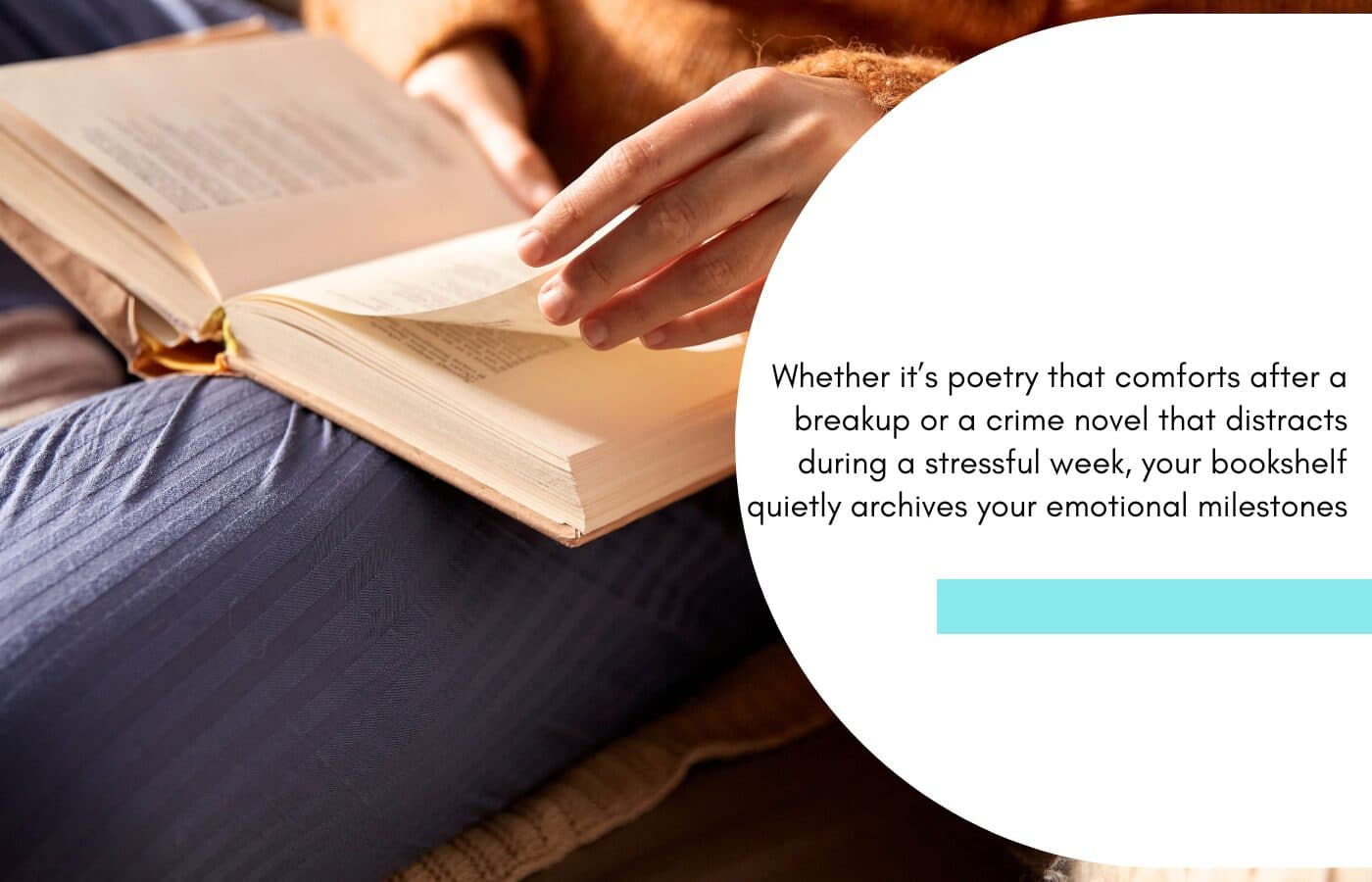
The books you reach for during tough times, or those you cling to when you’re searching for inspiration, are rarely random choices. They often arrive when you need them most, even if you don’t realize it right away. Whether it’s poetry that comforts after a breakup or a crime novel that distracts during a stressful week, your bookshelf quietly archives your emotional milestones.
We live in a world where self-awareness and emotional well-being are becoming part of everyday conversation. Sometimes, it’s worth pausing to see what your books have been trying to tell you all along.
How emotions shape reading choices
It’s easy to think we read just for entertainment, but our book choices often have emotional roots. Psychologists call this “bibliotherapy” – the idea that reading the right book at the right time can help process emotions, manage stress, or recover from grief. Even a fast-paced novel or a childhood favorite can have a soothing effect when comfort is needed.

Often, we reach for certain books before we’re even fully aware of what we need. Someone stuck in life might be drawn to motivational reads, while someone lonely may find themselves picking up stories about friendship. Reading becomes a subtle way to understand feelings we haven’t yet put into words.
Your shelf as a quiet timeline
Take a look at your shelf and notice any clusters. They’re silent markers of what you were feeling at the time. It’s almost as if your bookshelf keeps a quiet diary for you, without judgment or deadlines.
- The ‘fix me’ phase: Books found during times of stress or transition.
- The escape phase: Fiction that offers relief when the world feels overwhelming.
- The soul-searching phase: Poetry, memoirs, or spiritual books that help frame big questions.
- The quiet pile: Unread books bought in hope, sometimes reflecting burnout or waiting for the right moment.
Your shelf holds clues, even if you never planned it that way. It gently reminds you of where you’ve been and hints at where you’re headed.
Books that arrive when needed
Sometimes, it’s not just what we read, but when we read it that makes a difference. There are books we forget the plot of, but never the moment we read them. Maybe it was a late night during college, or a morning train ride, where a paragraph suddenly made sense of something we couldn’t explain.
- A line that stays in your head.
- A character who feels familiar.
- A story that leaves you quieter than before.
Only later do we realize that the book came to us right when we needed it. There’s a quiet magic in that.
Letting go of books: Growth, not loss
We form attachments to books and not just their stories, but what they represent: phases of life, emotions, or people we once were. Some books sit untouched for years, yet we hesitate to give them away. Letting go isn’t a failure; it can be a quiet act of trust that we’ve taken what we needed, even if we didn’t finish it.
Letting go sometimes means making room for something new, or for someone else who might need that book today. Passing a book forward can feel like sending a part of ourselves into the world, hoping it lands somewhere soft.
Sharing books, sharing stories
At some point, every reader wonders what to do with books they no longer need but can’t seem to throw away. Books carry traces of who we were in an underlined quote or a dog-eared page or a small stain from a cup of tea.
Imagine someone else picking up that same book, adding their own story to it. Sharing books isn’t just about decluttering; it’s about connecting with others through shared words and experiences.
BookMandee offers such an experience, making it easy to give away old books. A book gets a second chance instead of sitting forgotten on a shelf. Often, it finds its way to someone who needs it.
Maybe you were the story all along

A bookshelf is never just a shelf. It quietly archives who we’ve been: the things we’ve forgotten, the phases we tried to grow out of, the questions we weren’t ready to answer, and the feelings we didn’t say aloud but saw reflected in stories and poems.
As you move forward decluttering, re-reading, passing books on, you’re not just tidying up. You’re checking in with yourself, noticing how far you’ve come, and maybe where you still want to go.
So next time you’re in front of your shelf, pause. Let a title surprise you. Let a memory surface. Maybe your bookshelf knows your emotions better than you ever gave it credit for.