
Do you feel you’re always taken for granted by your close ones?
Do you feel drained after talking to a certain family member?
Do you feel you can’t freely express your opinions or feelings in family discussions?
If you answered yes, you might want to create strong boundaries around yourself. But you also might fear hurting your close ones.
It’s possible to draw the line, and prioritize your needs in a way that your families understand and respect your decision.
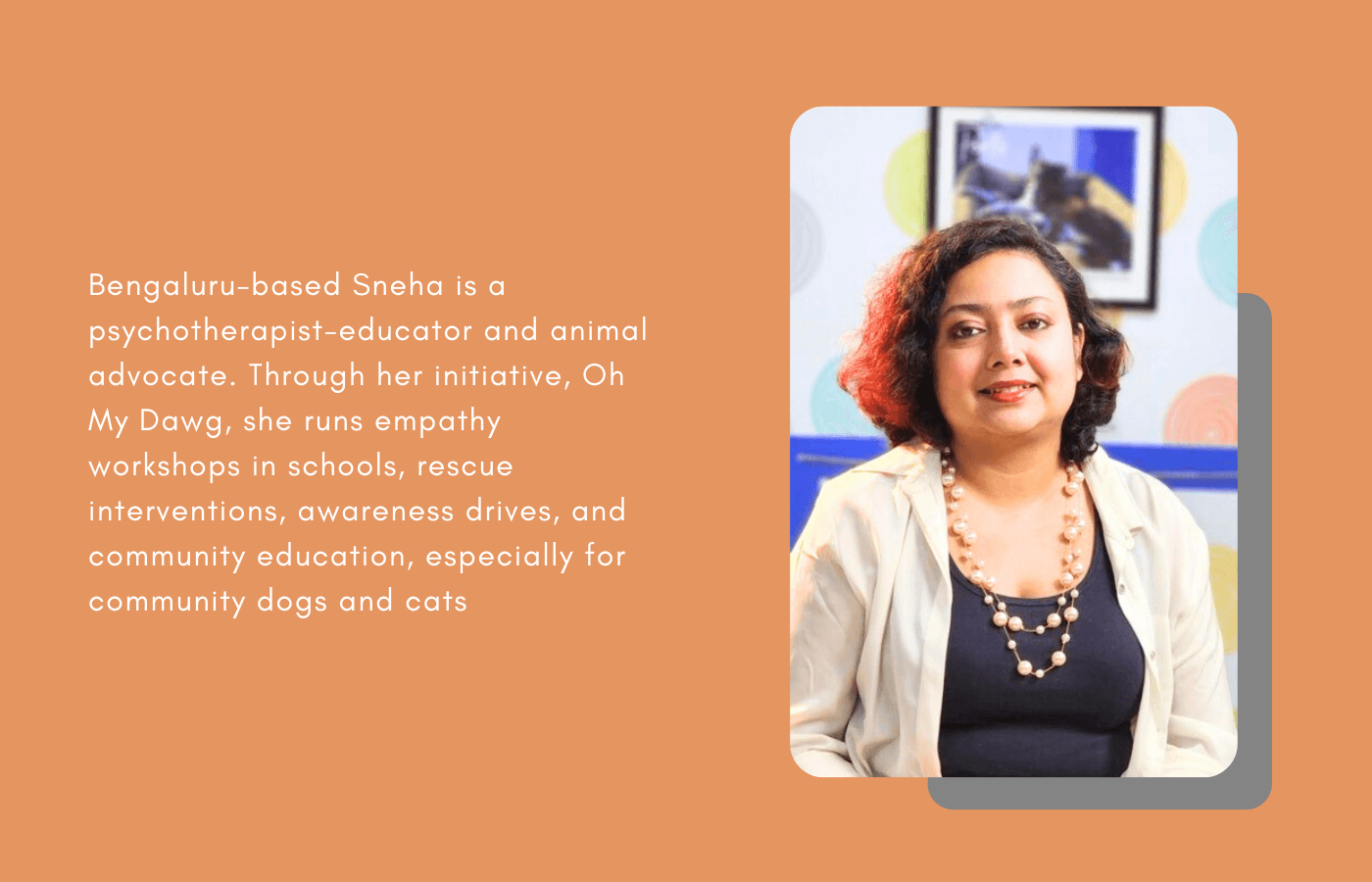
To help you set healthy boundaries with your families, Myndstories talked to Disha Manchekar, a psychologist, trauma therapist, and the founder of ‘Innate Mind’ for some insights.
What are healthy boundaries with your families
Healthy boundaries mean creating an imaginary fence around you to protect yourself physically, mentally, and emotionally. By creating personal boundaries, you help your family members understand what you are able to accept and what is beyond a certain limit.
For example:
- you have the right to say ‘no’ to things that you don’t want to do
- you don’t need to accept comments on your body weight or other personal issues
- your needs are as important as theirs
- you can’t fulfill all of their expectations
- you deserve and need to be treated with respect
- you have the right to be yourself and to express your emotions and opinions
You can set your boundaries for:
- personal space and things
- sexuality
- energy and time
- eating habits
- religious habits
Importance of having healthy boundaries with families
A lack of boundaries creates a lack of respect. When you set healthy boundaries, your family respects your needs and stops taking you for granted. Besides, you feel heard and can take a stand for yourself while allowing others to have space for their needs.
Apart from this, you become emotionally strong and feel safe and secure with your family.
Remember that boundaries are for you, not for others. Setting firm boundaries doesn’t mean you’ve to be rude or unkind toward them. To state firm limits, try to remove yourself from that situation.

For example – you are having a serious conversation with your partner. When things heat up your partner raises their voice against you. Don’t react to this by shouting back. Instead, say, “I don’t like you yelling at me. We’ll talk when you’re ready to have a healthy conversation.” And walk away.
Here, you’re firm as well as polite.
Setting boundaries requires reinforcement and it will take time for the other person to change their actions or behaviors.
It’s also important to be mindful that boundaries should be healthy and respected by you and your family members. It should not be used to control others or break relationships.
Common challenges in setting boundaries with families
Why do we Indians find it challenging to draw the line?
Disha says, “In India, we follow a collectivist ideology in our family system, which means we prefer family (group) over individualism. Several families believe it’s essential to make a collective decision or that elders know what is right for everyone.
An individual family member’s personality traits, interests, ambitions, and emotions may get sidelined while trying to conform to what their family thinks is right. Therefore, setting up boundaries may get complicated in Indian households. I have observed this while working with my clients who struggled to set boundaries.”
Likewise, Melissa Urban, in her book, ‘The Book of Boundaries: Set the Limits that will set you free,’ says, “A lack of boundaries, much like trauma, is often passed down from generation to generation. So take the first step and break the cycle.”
There are other common challenges
You don’t know how to set emotional boundaries – Not knowing your needs can confuse and stop you from putting your foot down. Sometimes you need to remember that you have the right to set boundaries.
You can’t say ‘no’ – You think people might get hurt when you say no. But learn to keep your emotions aside while setting boundaries if you care for your mental well-being.
You think it is selfish or rude to others – Setting limits is not about being selfish or rude. But you’ve guilty feelings because you fear confrontation. Always remember you need space to decide what works for you and what doesn’t. Think of it as a part of your self-care.
You’re a people pleaser – You please others because you might be in a codependent relationship and cannot separate your feelings from others. Or you might’ve experienced insecurity during your childhood. But it’s time to start setting boundaries for your mental well-being.
Signs of unhealthy boundaries
Unhealthy boundaries occur when one disregards or disrespects one’s own or another person’s values and needs. It can also occur when you have set boundaries that are too rigid or too weak.
The following signs can stop you from defining the parameters for healthy boundaries.

Signs that your boundaries might be too rigid
- you keep people at a distance
- you refuse to express emotionally
- you avoid the other person completely
- you give silent treatment to them
- you don’t ask for help
- you avoid being intimate with your partner
- you try to control others to have things your way
Signs that your boundaries might be too weak
- you find it hard to say no
- you set boundaries and break them yourselves
- you take up more responsibilities even when you don’t want to
- you overshare personal information
- you don’t stand up for yourself when mistreated
- you’re afraid of rejection, disapproval, and conflicts
- you don’t know how to set limits
- your opinions depend on others
- you can’t express your needs or wants
How to establish healthy boundaries with families
Disha shares a few practical tips to help you break the cycle of unhealthy boundaries and establish healthy ones with your family.
Become aware of your cues
A starting point would be to become aware of your thoughts, emotions, and bodily sensations. These cues tell you of your boundaries getting violated.
For instance, when you notice having negative thoughts, don’t feel good, or stress starts to build up within the body, take a pause to self-reflect. Try to understand what is important to you and where you need to set limits for your well-being.
Prerequisites to communication
We often do not consider our family member’s frame of mind or our own before discussing the issues that bother us, which can further lead to misunderstandings.
For instance, your message won’t get delivered as needed when you speak angrily with your loved ones. Apart from this, keep in mind their capacity to understand and the mode of communication.
Use non-confrontational language
Indians most likely hate confrontation. That’s why when it comes to rejections, we would rather ‘ghost’ an individual or we try to sugarcoat the rejection.
Confrontational language may also be looked at as disrespectful in families. So, use language that is non-confrontational and non-judgmental. Avoid making demands or ultimatums as much as possible.
Practice assertiveness
Another suggestion would be to practice assertiveness. It means to take responsibility for your actions, thoughts, emotions, and what you say.
While communicating, use ‘I’ language – ‘I think XYZ about that situation.’ or ‘I was feeling XYZ emotions after hearing this.’ Also, remember to communicate concisely and clearly instead of beating around the bush.
Be prepared for responses
Although you may have communicated as accurately as possible, be prepared for reactions and responses. Remember that your family members can also form opinions or feel emotions.
They may respond either positively, neutrally, or negatively. And that’s okay.
Be patient
Think about it this way – For the longest time, you haven’t set any boundaries. Your family might be used to it. Once you start establishing boundaries, it may be a change for them too.
Any change takes time. So be patient and persistent, and reinforce your boundaries as needed.
Also, try these activities to understand how to define, communicate, acknowledge, and keep your boundaries.
Understand your worth and set healthy boundaries
As author, Melissa Urban says – “I appear assertive, independent, and self-confident to others. But I’m not selfish. What I am is someone who takes her mental health, energetic capacity, and worth seriously, and does what needs to be done to protect them.”
We hope you, too, understand your worth.
If you still struggle with setting healthy boundaries, we suggest talking to a mental health professional for further guidance. It’s time to take charge of your mental health and emotional well-being.