
“My friend recommended that I go for group therapy. But I don’t feel comfortable talking to a group of strangers! How can I share my personal issues with others? Is group therapy effective? What about confidentiality? I’m not sure what to expect.”
Do you, too, have similar concerns about group therapy? Well, we have got your back! We talked to Mahi Modi, a counseling psychologist, yoga instructor, and dance movement therapy practitioner, to get insights on benefits of group therapy.
What is group therapy?
Group therapy is a form of psychotherapy where multiple treatment specialists facilitate counseling sessions for several people at a time to help manage disorders or cope with life challenges like loss, suicide, loneliness, etc.
The group size varies from 5 to 12 people. You can join open groups whenever you want and will need to register for the closed groups and attend the session on the given date. Your therapist will guide you to join a group that aligns with your treatment goals.
So what happens in group therapy? It’s a safe space where people share their struggles and thoughts and learn about other people’s challenges and coping abilities.
People feel less isolated in the group as they learn from each other, solve problems, and share their success stories.
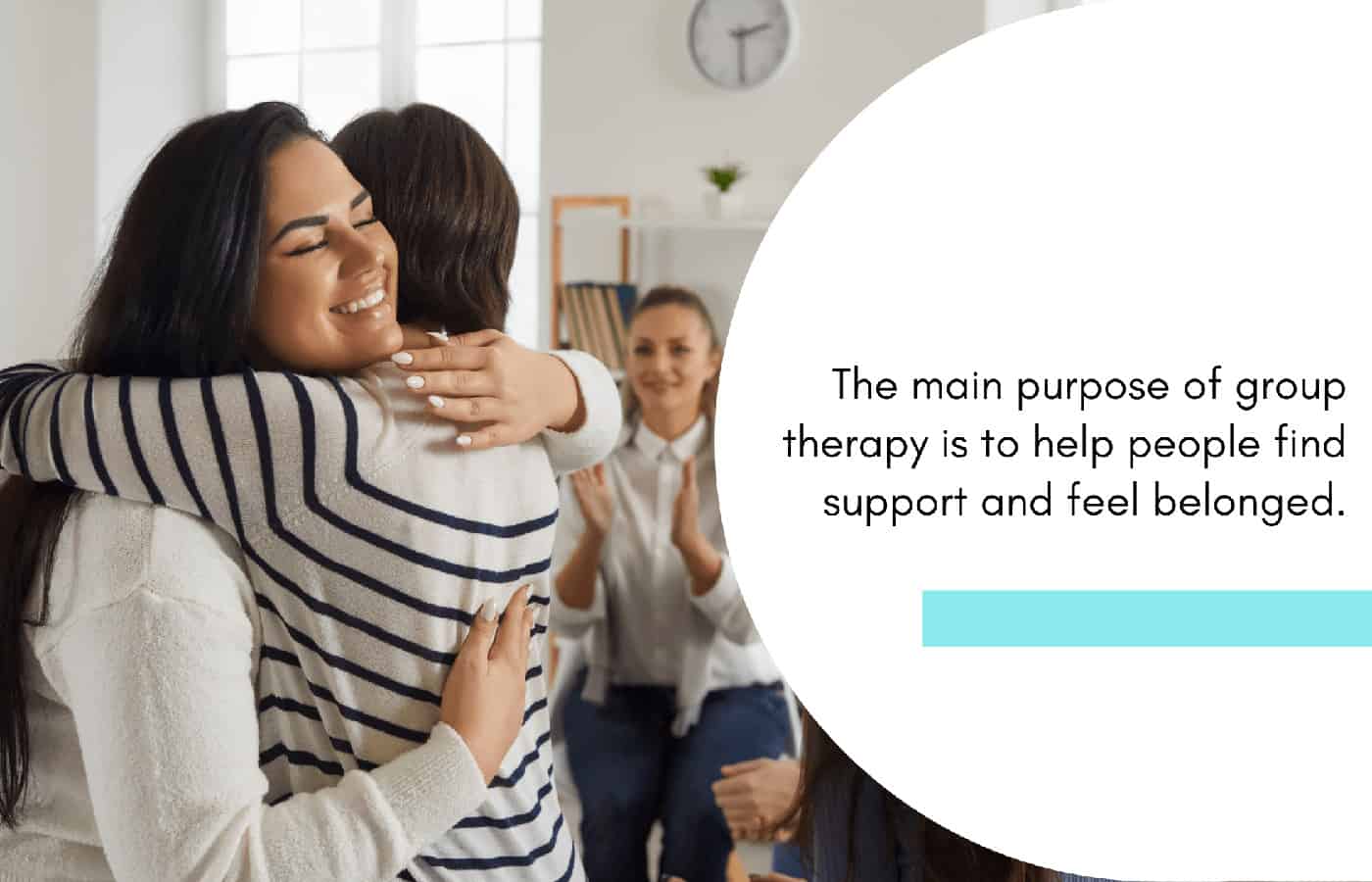
As Mahi says, “The main purpose of group therapy is to help people find support and feel belonged. We feel lonely and think we are the targeted ones during these times, and it just happens to us. Knowing that we are not alone and others have had similar experiences is important. This is not to undermine your experience but to openly share with a community that has had a similar experience.”
Different kinds of group therapy
Group therapy can help you with different kinds of groups such as:
Psychoeducational groups
Psychoeducational groups are useful for educating patients about their diagnosis and how they naturally react to certain situations. Participants are encouraged to continue the sessions by actively engaging with others and bringing positive behavior change with different learning styles such as:
- visual learning
- hands-on activities
- auditory presentations
Studies show that GPE (group psychoeducation) is an effective treatment for reducing relapse rates of people with bipolar disorder. This proves educating people on their cognitive issues together with those facing similar disorders can be beneficial.
Cognitive- behavioral groups
Cognitive-behavioral group therapy is useful for changing the participants’ beliefs and perceptions. Most people feel indifferent and unlovable compared to their peers. But in CBT groups, the group facilitator guides participants to
accept their issues
embrace themselves
and improve their coping skills.
Initially, participants might be resistant to change but with the therapist’s support, they learn to focus on their thought and behavior modification.
In this study from Tehran, patients with Parkinson’s disease experienced improved mood and lessened anxiety and depression when they participated in a CBT group. It also helped them stay committed to the treatment guidelines and take effective action to prevent the complications of Parkinson’s disease.
Skill development groups
Skill development groups are useful for people whose diagnoses prevent them from developing daily life skills. The focus is on coping methods and learning techniques for coping with emotions and socializing skills.
For example, in an interpersonal skills development group, the participants are asked to analyze their relationships with their family members and write one or two lines about them in a relationship web table. This activity helps them to know the root cause of their good or strained relations with others. It helps them build new relationships, strengthen existing ones, and constructively end personal and professional relationships.
The other techniques with various activities are as follows:
- Self-awareness & effective communication skills
- Enhancing critical thinking skills
- Decision-making & problem-solving skills
- Coping with stress and emotions
Support groups

Support groups are useful for people who have already started treatment for their respective disorders. Such groups help them maintain newly cultivated behaviors and strengthen new belief systems and thought processes. Participants learn to manage daily life symptoms and discuss how they tackled their recent issues.
The support group therapist assists participants in developing connections, appropriately interacting with each other, and bringing positive reinforcement. In this way, support group members talk about their new behavioral learnings, coping skills, tips on meditation, journaling, or setting boundaries, and provide practical guidance to other group members on the issues based on their experiences.
When asked about what techniques therapists use during sessions, Mahi clarifies, “The techniques vary as per the different group types and the needs of the participants. There are prompts that help participants share and are given the space to acknowledge each other’s presence and reflections.”
Group therapy helps with various disorders
There are a lot of issues that can be covered under group therapy, as given below.
- Social anxiety, grief, and depression
- Post-traumatic disorder (PTSD)
- Attention deficit hyperactivity disorder (ADHD)
- Substance use disorder
- Eating disorders
- Phobias
- Generalized anxiety disorder
In addition to psychological issues, group therapy can help you with the following:
- Obesity and weight loss
- Chronic pain and illness
- Anger management
- Domestic violence
- Relationship issues
What can people expect in a group therapy session?
Typically, group therapy sessions last for around an hour or two and helps with processing thoughts and emotions. Here’s what you can expect in a group therapy session.
Group support
You get support from your therapist as well as group members who are experiencing similar situations. It helps you build confidence and motivates you to interact more in upcoming sessions.
Enhanced social skills
Do you find it difficult to get along with others? Do you get uncomfortable speaking up with strangers? A group therapy session can help. You’ll be part of ice-breaking activities to help you improve your conversational skills and connect with others with confidence.
Overcome your fear of making connections with others
Do you struggle with fear of judgment? Or fear of rejection? Group therapy can help you connect with group members who can relate to your issues and provide support. It’s a good opportunity to feel heard without sympathy and judgment.
Learn more about yourself and others
In group therapy, interactive sessions help you learn more about yourself including your thoughts, perspectives, coping skills, and inhibitions. Participants help each other understand themselves better under the guidance of a trained therapist.
What about the safety and privacy of the information you share? Mahi says, “The group facilitator is equipped to support someone who doesn’t want to share their thoughts or issues in the group. Also, members don’t need to respond all the time. Group therapy is a confidential space to be open, but you still have control over what you want to share and what you want to keep to yourself.
Usually, participants sign a confidentiality form, which ensures the safety and privacy of what is being shared by everyone in the group. The group agrees on not discussing anything outside of the space. It is also ensured that the participants don’t know each other to avoid inhibitions while sharing.”
Benefits and effectiveness of group therapy
Below are the benefits and effectiveness of group therapy.
Benefits of group therapy
- Group therapy is a place where you get a proper support system.
- You can share your feelings, thoughts, and concerns or get something off your chest.
- You learn to name your feelings and acknowledge your triggers.
- Other people’s responses, reactions, and experiences can help you understand your situation better.
- You learn more about new behaviors, thoughts, beliefs, and perspectives of yourself and others.
- You feel less isolated from like-minded people.
- You get cost-effective treatment therapy under the guidance of a specialized therapist.
Effectiveness of group therapy
Group therapy has shown to help participants experience a reduction in their symptoms and learn coping skills and acceptance.
In his book ‘The Theory and Practice of Group Therapy’ Dr. Irvin D. Yalom mentioned that the instillation of hope, universality, information giving, altruism, and other therapeutic factors have profoundly affected patients.
Studies have also shown that commitment and acceptance group therapy has proved useful in improving the condition of women with obesity by working on their disturbed eating behavior, life habits, and health-promoting lifestyle.
“Group therapy is very effective for anyone seeking it. Individuals looking for safe spaces to share and interact with others about their concerns are mostly recommended group therapy. Individuals lacking social support in their communities are also advised to go for group therapy. It is a therapy space to interact with others living through similar experiences of illnesses or disorders,” says Mahi.
Group therapy can make you feel connected, heard, and important. However, Mahi adds that it is not necessary for any group that serves your needs to be the right fit for you. Don’t expect to feel comfortable instantly. Every group member seeks support from each other. Give group therapy a fair shot, be open to new experiences, and help each other grow.