Have you ever been in one of those tricky situations where you wake up feeling really good? Those moments where you feel centered and in complete control of your emotions.
Then something, seemingly small, jerks you out of that mojo, totally scrambling your balance. In those moments, like dominos falling, you may feel those positive vibes giving way to far less positive ones.
It’d be impossible to analyze every balance-scrambling situation. Still, if we pick out two of the most likely situations—and do a sound analysis—you can learn to be better prepared to handle them.
In this article, let’s discuss:
● How to respond to invalidation
● How to deal with an angry person
● Why you become extra sensitive when someone yells at you — and what to do about it
How to respond to invalidation
It never feels good when someone invalidates your feelings.
Hearing statements like “You’re overreacting” or “You take everything too seriously” are upsetting, often worsening the issues that led to them.
When someone invalidates your feelings, they refuse to accept your thoughts and emotions regarding an incident as true. If someone you care about invalidates your emotions regularly, it can lead to adverse mental health issues like worthlessness and self-isolation.
So, how do you deal with it? Try these things:
Restate your feelings to the invalidator
This is a simple solution, but it should be tried first. Many times, when we express our feelings and thoughts to a person, we don’t pay enough attention to the listener’s current emotional state.
Their timing may be off. They may be having a difficult day or existing in a completely different mental space, heavily restricting their emotional bandwidth.

It’s important to try again with more assertion and clarity in cases like that. So when someone says, “I think you’re overreacting,” you could say, “I don’t think I am, and I feel hurt that my emotions have been dismissed here.”
Always a good idea to give people the benefit of the doubt.
Seek clarity within yourself
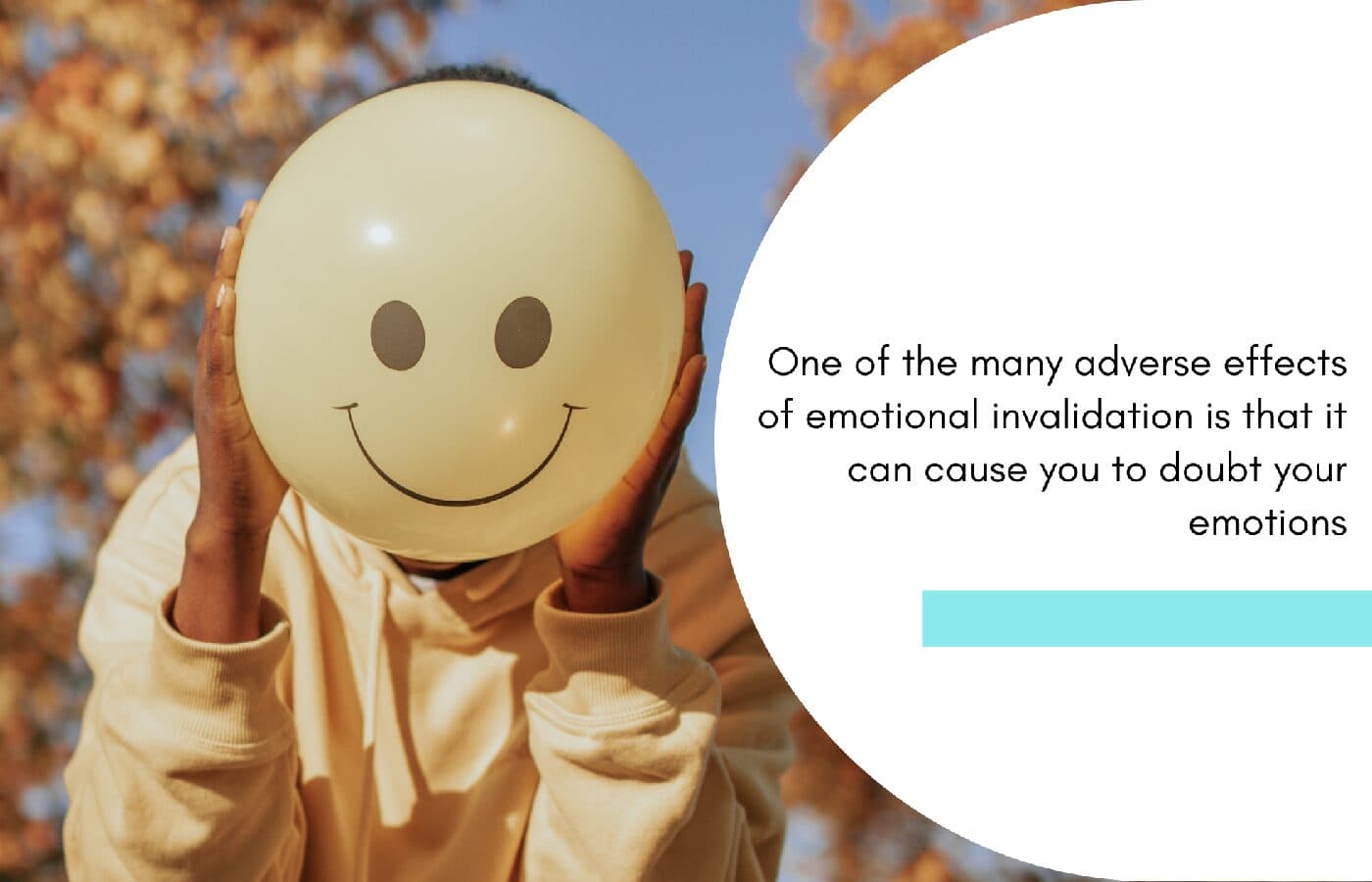
One of the many adverse effects of emotional invalidation is that it can cause you to doubt your emotions. Don’t fall into that trap.
Your emotions are valid, and a listener’s ability or inability to accept them should not matter. Vent privately to yourself, processing your feelings without judgment.
Stop sharing with the invalidator
This is the least appealing way but sometimes the most effective. If someone consistently invalidates your feelings, consider setting boundaries.
Spend less time with those who dismiss your emotions and seek out supportive relationships instead.
Read further: This page on Quora where people shared tips on responding to emotional invalidation. Some ways are healthy, others not so much.
How to deal with an angry person
In non-violent, heated situations, there’s usually at least one angry person. Let’s assume that it isn’t you, that you’re on the receiving end of an outburst.
What should you do to de-escalate the situation?
First, don’t do these things:
1. Do not invalidate the person’s feelings. Don’t say “calm down” because that never works.
2. Do not be overly defensive. Show that you don’t like the situation and you’re willing to take steps to resolve it.
3. Don’t get angry too. The worst thing to do in a tense situation is add more heat.
Next, use these tips:
Stay calm
This is easier said than done, but remaining calm can prevent the situation from worsening. Take deep breaths and try to ground yourself.
For example, you can count 1-60 internally very slowly.

Listen actively
Sometimes, angry people just want to be heard. Give your full attention and try to understand their perspective.
Validate their feelings
Emotional validation is a game-changer. It doesn’t mean you accept their behavior, but it does mean you acknowledge the emotions that have led to it.
Use a low, slow voice
Imagine you were pissed about something but the subject of your anger responds to your outburst calmly and softly. Hard to remain fired up, yes?
It works if you do it too!
Bringing it all together
Both responding to invalidation and dealing with an angry person require a strong sense of emotional boundaries. These boundaries are invisible shields meant to protect your emotional well-being in challenging interactions. With them in place, you can maintain your feel-good mood for a longer time, avoid upsetting situations, and remain in control of your emotions.
To establish and maintain healthy emotional boundaries, you need to do these things:
● Know and honor your own feelings and needs
● Communicate these needs clearly and respectfully
● Recognize when others overstep
● Take action to protect your emotional well-being
Emotional boundary setting isn’t selfish; it’s an act of self-respect. If you don’t prioritize protecting your emotions, why should anyone else?
The impact of a professional
If you find yourself consistently struggling with invalidation or managing your responses to anger, it might be helpful to speak with a mental health professional.
They can provide personalized strategies and support as you build your emotional toolkit.