Random acts of kindness have the potential to make the world a happier place.
Kindness lights us up, filling us with warm fuzzy feelings we often relate to well-being and happiness. A study published in the American Psychological Association suggests that such acts of kindness aren’t just altruistic, they also improve our mental health and emotional well-being.
Every act, no matter how big or small matters. When you open a door for a stranger, volunteer for a good cause or listen to a friend in distress, you are being kind.
And as Anne Frank wrote in her essay, “Give and you shall receive, much more than you would have ever thought possible” – Kindness is like therapy that we don’t need to pay for because the giver benefits more than the receiver, as Harvard School research shows.
Studies have attempted to measure the power of kindness in alleviating stress and anxiety, boosting mood, and building self-esteem. But how do we define kindness and how does it impact our well-being and mental health? Let’s find out.
What is a random act of kindness?
The American Psychology Association (APA) defines kindness as a “benevolent and helpful action intentionally directed towards another person, motivated by the desire to help another and not to gain reward or to avoid punishment.”
Kindness encompasses the feeling of putting someone else’s needs before our own. It’s a deliberate effort – with or without reflection. Kindness can be other-focused or self-focused.
While we practice the former often, we forget the kindness we need to give ourselves, whether it is taking a break from work, forgiving ourselves for a mistake, giving pep talks to ourselves, or getting back to our hobbies. In her research, Kristen Neff discusses how self-compassion helps us be less critical of ourselves, leading to greater life satisfaction and mental wellness.
Kindness is contagious and has a ripple effect. Nirmala Mehendale, Founder Trustee and General Secretary of Kindness Unlimited, the only NGO to represent India at the ‘World Kindness Movement,’ says, “When millions of fireflies come together we can create light, beauty, and hope. It is the power of numbers that create larger ripples and a bigger impact.”
Nirmala then recounts a story, “Ann and her teenage son had flown down to Mumbai for a wedding and were headed back home after some last-minute shopping in a taxi. They reached home and realized an hour later that the kurta they had purchased was missing.”
Nirmala continues, “As the wedding was to happen in two days, Ann resigned to purchasing a similar kurta and getting it altered in time for the big day. She called the shopkeeper to inform the same and could not believe her ears when the shopkeeper told her that the taxi driver had called them and said he had the kurta and gave his phone number.
Ann contacted the driver and the next day the driver delivered the kurta, saving them much time and effort. The mother and son, the shopkeeper, and the taxi driver all felt good, and along with them many families and friends who heard the story.”
How does kindness impact our well-being and mental health?
There are some astonishing mental health benefits of practicing kindness in our daily lives proven scientifically. 63% of UK adults agreed in a survey that when they experienced kindness from others, it had a positive effect on their mental health, and the same proportion agreed that the impact was the same when they acted kindly towards others.
Another study published in the Journal of Social Psychology found that acts of kindness and generosity towards friends, strangers, and ourselves positively impact our well-being and happiness. However, the impact is more pronounced in face-to-face interactions than online contributions.
Lara Aknin, Associate Professor of Psychology at Simon Fraser University in British Columbia, says, “When people give in ways that are more socially connected or relational, that seems to better unlock these emotional rewards.”
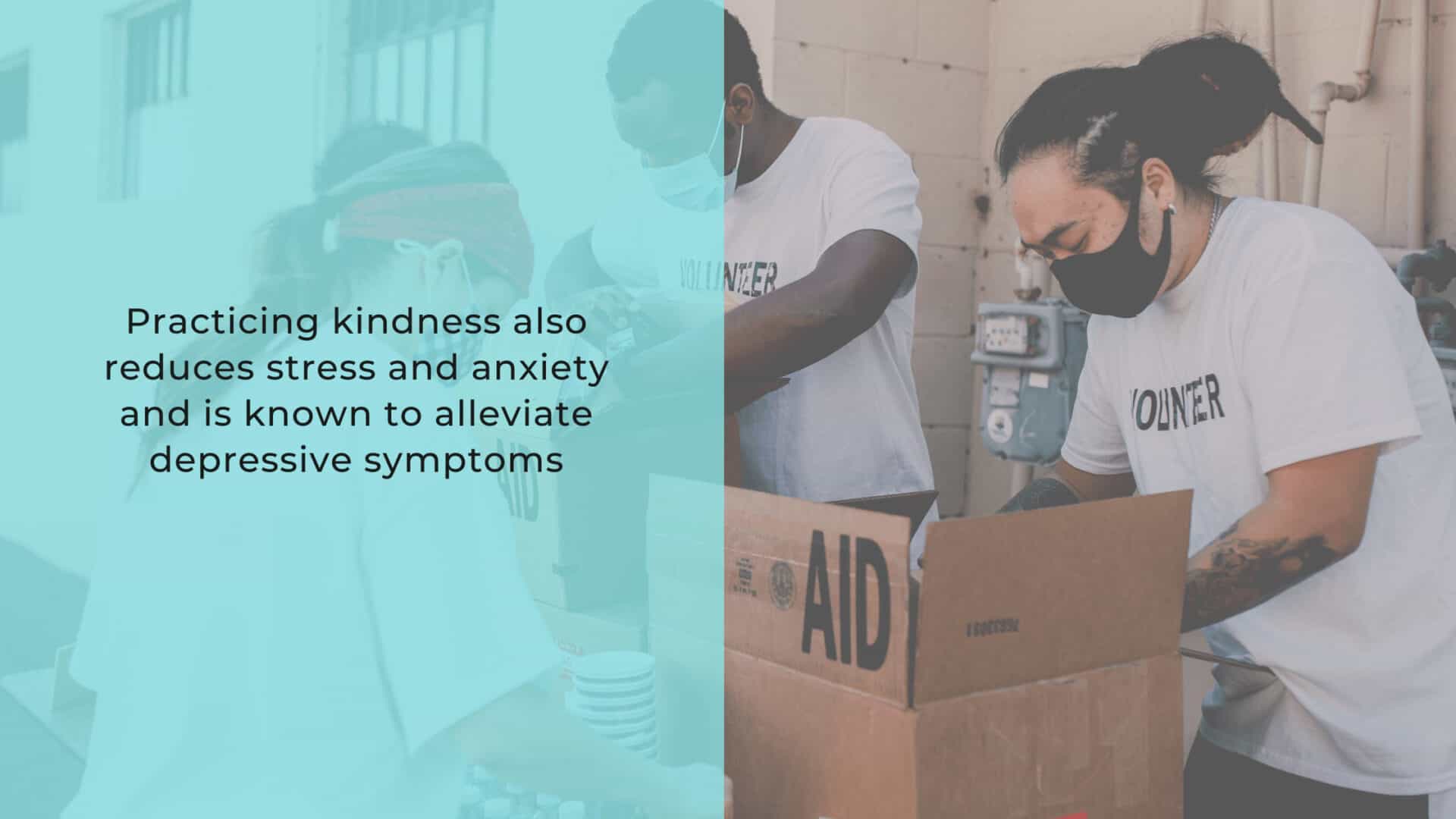
Practicing kindness also reduces stress and anxiety and is known to alleviate depressive symptoms. A study on Integrative Psychological and Behavioural Science found that people who practice kindness have 23% less cortisol and age lower than the average population.
Steve Siegle, a Licensed Professional Counselor in Psychiatry & Psychology, explains the science behind the positive impact of kindness. He says, “Being kind boosts serotonin and dopamine, which are neurotransmitters in the brain that give you feelings of satisfaction and well-being, and cause the pleasure/reward centers in your brain to light up.”
When we are kind to others, we feel stronger and more energetic. This phenomenon is called helper’s high. That’s why prosocial behavior is associated with happiness and elevated feelings of self-worth and satisfaction.
Performing acts of kindness releases oxytocin, the feel-good hormone, which increases our self-esteem and optimism. These increased feelings of happiness increase our mental strength and act as a buffer during difficult times.
How can we include random acts of kindness in our day-to-day lives?
Kindness can be spontaneous. Acts of kindness need not be elaborate or time-consuming. They can be as small and simple as:
- Volunteering for a local NGO or charity
- Checking up on your friends, neighbors, and loved ones often
- Offering a helping hand to the elderly (a smile works wonders too)
- Lending a listening ear to a friend who needs to talk
- Planting and taking care of trees in your neighborhood
- Helping your siblings with their studies
- Appreciating and expressing your love to your family members and friends
- Giving time to your family and yourself
- Adopting a stray
The world needs a kinder us
The 2019 World Happiness Report by UNESCO shows that kindness and generosity are positively correlated with happiness and satisfaction in societies.
With the events unraveling each day around us, especially during and after the pandemic, and the stress and strains we undergo every day, there’s an absolute ne
ed to build a kinder society and leave a tradition of compassion, empathy, and care.
People, more than things, need to be restored, revived, and redeemed. And as Nirmala quotes, “When givers meet givers, magic happens.”
A helping hand for a wand and warmth trickling down our senses, transforming into smiles and positivity – the magic is bound to happen.