
Have you ever met nice people and wondered what makes them “nice”?
Are they statements like these?
“I’m so sorry, it must be my fault.” (Taking blame even if they aren’t responsible).
“No worries at all! I’m happy to help.” (Even when they’re overburdened with work).
“Of course, whatever you prefer.”(Putting their own needs aside).
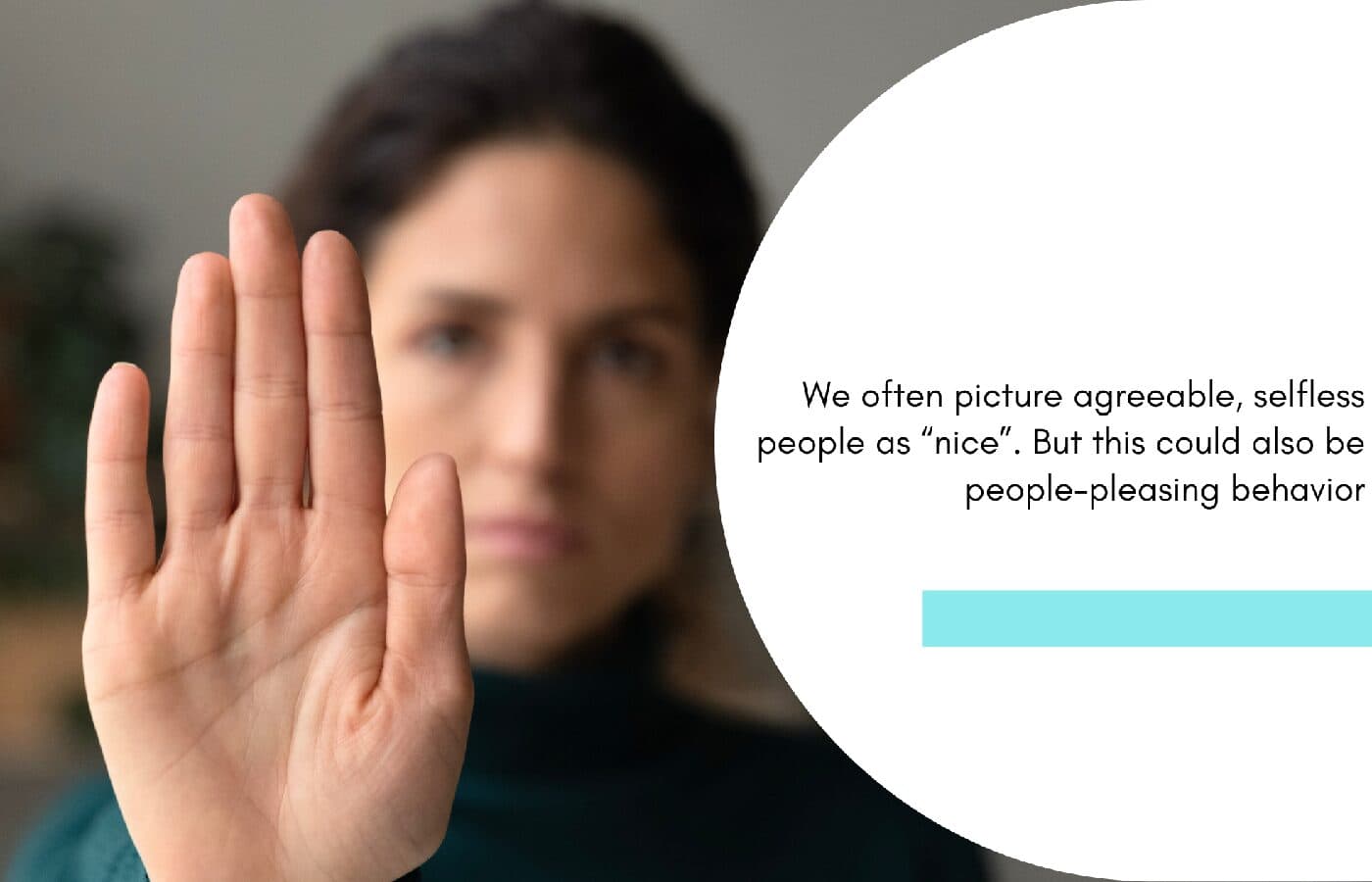
We often picture agreeable, selfless people as “nice”. But this could also be people-pleasing behavior.
True niceness goes beyond simply going along with everyone. What’s the difference, then?
People-pleasers prioritize others’ needs, often neglecting their own. They might constantly apologize or agree excessively with others, even when burdened. Truly nice people are considerate and helpful, but they set healthy boundaries. They know when to say ‘no’ and express their opinions respectfully.
Being kind and nice is great but it’s not synonymous with self-sacrifice. Kindness is about genuine care and compassion, and creating win-win situations where both parties feel respected.
What makes a people-pleaser?
People-pleasers often prioritize others’ happiness at the expense of their own, driven by a deep need for acceptance and fear of conflict. Their behavior can stem from childhood experiences, cultural influences, or personality traits like high agreeableness and anxiety. Understanding these underlying factors can help break the cycle of constant pleasing.
- The need to avoid arguments and be liked by everyone can be intense, which makes people go out of their way to please people around them. Psychologists call this high sociotropy. Research tells us that people high in sociotropy are typically agreeable (easy to get along with) and can get stressed or worried easily (neurotic).
- People who grew up in situations where they felt they had to take care of others’ feelings first might also be more prone to people-pleasing. More often than not, women are more likely to be raised this way than men, which makes women more susceptible to people-pleasing behavior.
- We are wired to automatically protect ourselves in different ways. Pleasing (or “fawning”) is now recognized as one of four trauma responses (i.e., fight, flight, freeze, and fawn). According to Peter Walker, a licensed psychologist and expert in complex trauma, “Fawn types seek safety by merging with the wishes, needs, and demands of others.”
- Research from 2023 suggests that fawning is a trauma response and occurs frequently in individuals who’ve experienced childhood sexual abuse. Appeasing their abuser may have helped calm down the situation and helped the person establish a false sense of safety.
- Earlier research, from 2019, indicates that those with emotional dependency may fear and avoid being alone, engage in people-pleasing behaviors, and seek exclusivity in romantic relationships. The authors of this study suggest that emotionally dependent people long for another’s presence.
- A study conducted in 2020 found that trauma can impact personality traits such as agreeableness, emotionality, and neuroticism—all qualities that influence how we relate to others and our relationships.
Signs of a people-pleaser
People-pleasers tend to prioritize others over themselves, often saying ‘yes’ even when it causes them stress. Their desire to gain approval leads them to overcommit and neglect their own needs. Spotting these behaviors is crucial for reclaiming personal balance and well-being. Here are a few signs that show someone might be a people-pleaser.
- Saying ‘no’ feels nearly impossible, even when overburdened or uncomfortable. That means you have a long to-do list filled with favors for everyone else.
- You crave external validation.
- Even minor disagreements trigger anxiety, leading you to avoid them at all costs.
- You prioritize others’ happiness over your own.
- You apologize frequently, even for things outside your control.
- Phrases like “Of course!” and “No worries!” fill your vocabulary, even when burdened.
- You feel drained and burnt out from constantly fulfilling everyone else’s requests.
The dark side of people-pleasing
People-pleasing comes with a heavy emotional cost, often leading to anxiety, frustration, and burnout from constantly trying to keep others happy.
Over time, saying ‘yes’ too often builds resentment and anger, while suppressing personal needs leads to unexpressed emotions that may eventually explode. This pattern erodes your sense of identity, strains relationships, and creates poor boundaries, making you feel taken advantage of.
People-pleasers may struggle to make decisions and find themselves neglecting personal dreams, leading to a flat, inauthentic life where spontaneity and joy are replaced by exhaustion and overwhelm.
How to not be a people-pleaser
Studies show that it’s hard to disagree with others because it elevates your cognitive dissonance, which is a distortion between your values and the actions you want to take.
But, you can still break free from people-pleasing tendencies. Psychodynamic psychotherapist Deepanshi Gupta tells us that breaking free from people-pleasing starts with identifying your triggers and understanding what you’re trying to avoid.
Reframing people-pleasing can help you see that social courtesy isn’t bad in moderation, but finding balance is key. Setting clear boundaries and learning to say ‘no’ is essential for prioritizing your well-being. Give yourself time before responding to requests as people-pleasers often feel pressured to respond immediately. Create mini pep talks for yourself. Repeat these sentences to yourself whenever you are trapped in an urge to please others:
- I’m allowed to say ‘no’.
- “No” is a complete sentence.
- A ‘no’ to them is a ‘yes’ to me.
- I don’t have to explain myself to anyone.
- I’m the guardian of my time and energy.
Acknowledge the emotional toll people-pleasing takes, and if needed, seek professional help to develop healthier coping mechanisms and restore balance to your life
People-pleasing is a learned behavior, and you can unlearn it.
Start small, and it will lead to big changes. It doesn’t matter if the changes are tiny, as long as you’re moving in the right direction. Be patient with yourself. You won’t become a boundary-setting pro overnight. But with consistent effort, you’ll create space for your mental well-being to flourish.