
Life is a journey, punctuated by constant challenges and roadblocks. And to survive and thrive while facing these roadblocks, resilience comes along as a handy tool. One might ponder here whether some people are born a little more resilient than others? Possibly.
However, resilience can also be built up.
But what exactly is resilience? It continues to be an ongoing challenge for researchers to define and quantify.
What is resilience?
The American Psychological Association defines resilience as the process and outcome of successfully adapting to difficult life experiences, especially through mental, emotional, and behavioral flexibility and adjustment to external and internal demands.
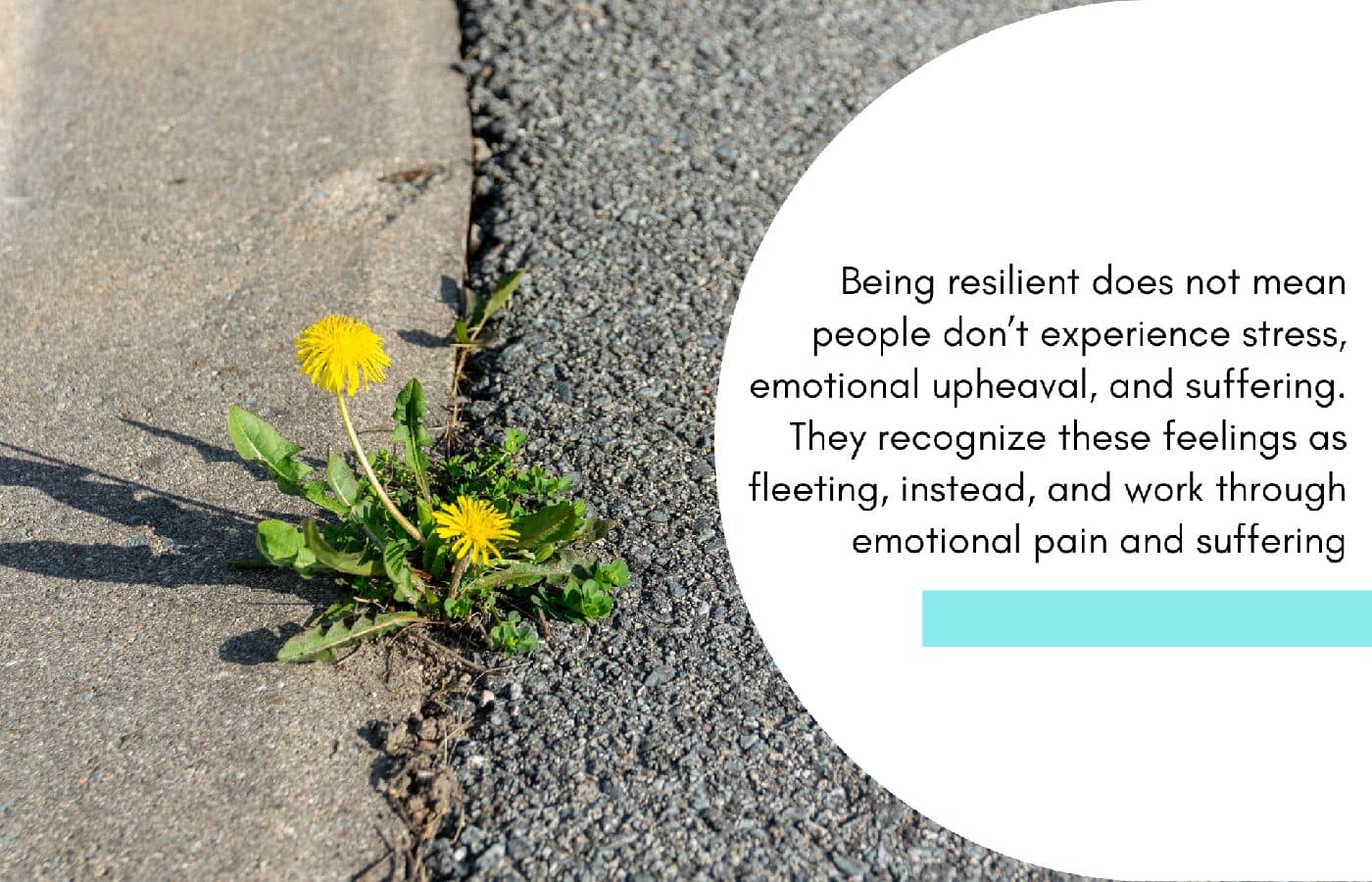
It is worth pointing out that being resilient does not mean that people don’t experience stress, emotional upheaval, and suffering. They recognize these feelings as fleeting, instead, and work through emotional pain and suffering.
From a distance, it may seem that resilient people are luckier than the rest. However, research points out that these people incorporate attributes and mindsets that help them demonstrate tenacity in the face of challenges.
Take, for example, the two-time Olympic pistol champion Karoly Takacs. The journey of this athlete with a disability exemplifies tenacity and resilience. He hoped to represent his country Hungary at the 1936 Olympics in Berlin. However, he was disqualified due to technical reasons.
This meant Takács had to wait until the next Games, scheduled for Tokyo in 1940.
However, he had a major setback in that intervening period. A defective grenade exploded in his pistol hand during a military exercise and his right hand could not be saved. While still recovering, Takács started to practice shooting in secret using his left hand. In the meantime, the onset of World War II forced the cancellation of the 1940 and 1944 Olympics, but Takács qualified for the Hungarian National Team for the 1948 Games in London.
He went on to win the gold in two consecutive Olympics, 1948 and 1952, thus becoming the first para-athlete to be at the podium of any Olympic event.
In this article, we look at seven attributes of highly resilient people like Takács and understand what makes them tick:
#1 They have a highly developed sense of self
People who are in tune with their inner selves are able to stand strong in the face of adversity and resist external negative influences. They can draw on their internal strength and are therefore less likely to be influenced by others’ opinions and judgments.
#2 They take failures as life lessons
At times, situations do not go as planned. Resilient people accept these circumstances in their stride and learn from them. They view failure as a temporary occurrence and as an integral part of the longer learning process. They are more likely to acknowledge what they cannot change.

In the Spanish book, ‘I failed! So what?’, the author Audrey Damas points out the highs and lows that came with 20 years of business building. However, throughout this long journey, Damas emphasizes the importance of being consistently resilient, and cognizant of the end goal despite facing the challenges associated with entrepreneurship.
#3 They have an intense desire to step beyond their comfort zone
Research indicates that resilient people have a growth mindset, and are constantly trying to improve and evolve on the path to achieving their goals.
#4 They have a strong purpose
The actions of highly resilient people are guided by a strong belief in their sense of purpose or goal. This substantially eliminates their dependency on extrinsic motivation. This helps them focus on the bigger picture rather than on mundane everyday tasks.
#5 They don’t get frightened by uncertainties of the future
Most people believe that not knowing how to do something and being unable to do so are the same thing. Highly resilient people don’t let stepping into unknown territory faze them. They tenaciously believe in their ability to find a way and face challenges relentlessly.
#6 They are highly selective of their company and mentors

Highly resilient people are aware that the company they keep will influence their personality. It is not that they never look to others for guidance and direction. However, they are very selective in who they choose to let into their inner circle. Once they have found the right people, they incorporate their habits and soak up all their traits to become improved selves.
#7 They practice gratitude and cultivate optimism
Our minds are tuned to look out for the negative, as part of our inbuilt survival instincts. In any interaction, we are most likely to notice and remember the negative event rather than the positive or neutral one. However, resilient people train their minds to be optimistic in all situations by constantly indulging in positive self-talk and acceptance of circumstances.
Everything can be inculcated with practice, and so is the case with resilience. The more you accept failure, the more opportunities you have to accept success and bounce back higher than you fall. And every time failure knocks at the door—instead of giving up—hone your existing skills and build habits for newer ones.


