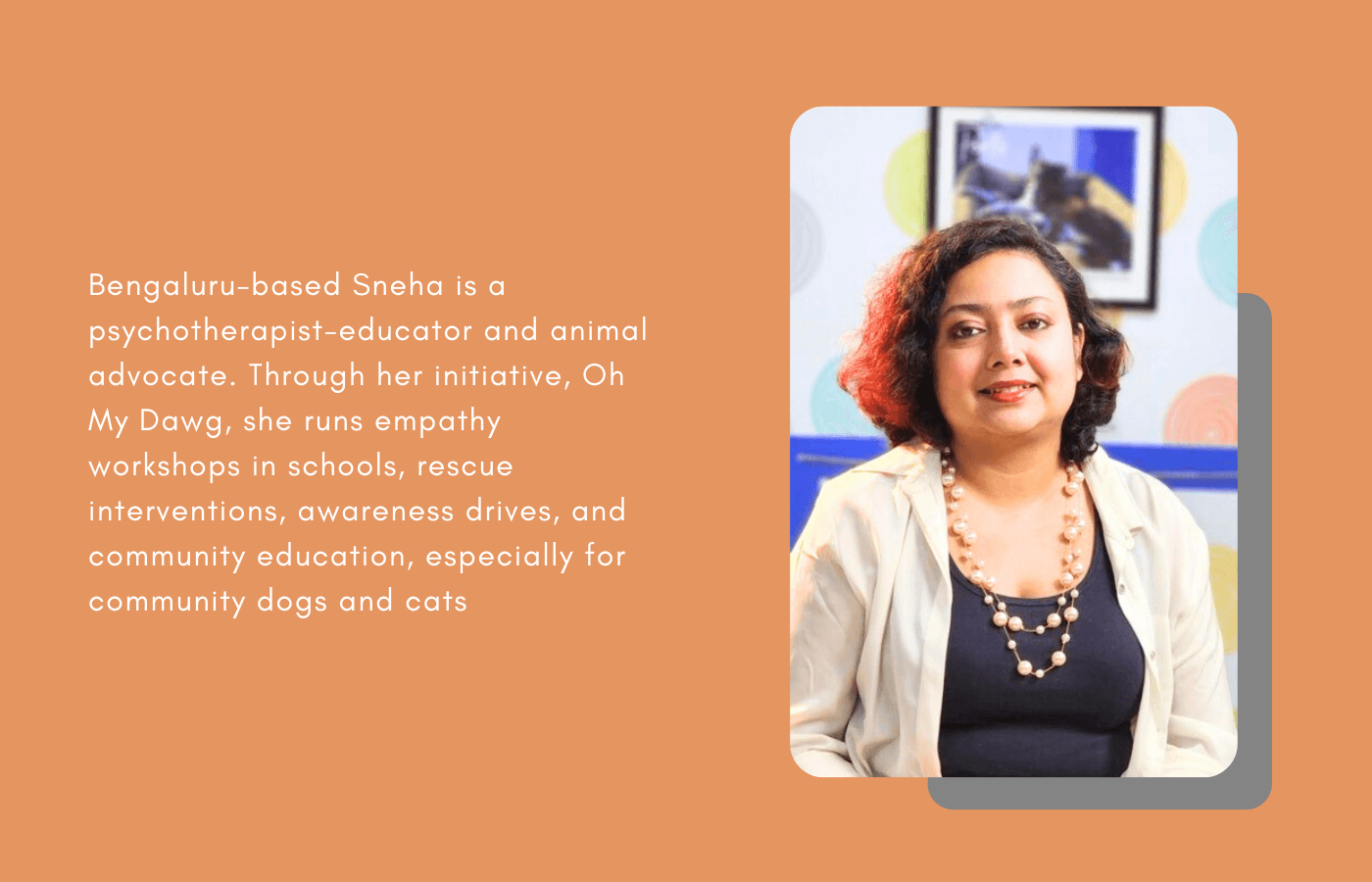

In an era where conversations about mental health often feel either overly clinical or lost in self-help noise, Kidiki arrives with the simplicity of a window, inviting us to pause, breathe, and look inward. A tactile, card-based practice, Kidiki transforms the act of naming sensations, feelings, and needs into a daily ritual of listening.
Launched in 2022, Kidiki was born out of its creator, David Soni’s search for relief from his own angst, and his vision to make emotional wellness accessible beyond urban and privileged circles. Originally from Kochi, Kerala, David says,
“It really began with my own intense suffering. In searching for relief, I explored many practices and slowly found ways of feeling lighter, more at ease in myself. That personal healing made me look outward to India, where emotional health is still deeply overlooked.”
The name itself carries layers of meaning. As David explains: “Kidiki comes from ‘Khidki,’ a window. For me, it is a portal to the child who still wonders, and the breath that connects us all.” Kidiki represents an ethos: slowing down, making space, and nurturing clarity in a world where emotional literacy is often limited.
This is a product shaped by neurodivergent challenges, grounded in embodied practice, and slowly expanding into schools, couples’ lives, therapy rooms, and beyond.
Origins and philosophy of Kidiki
Every meaningful tool begins with a philosophy, and for Kidiki, that philosophy is rooted in listening. David explains: “Kidiki has three decks: sensations, feelings, and needs. You flip through the cards slowly, noticing which resonate. That simple act creates a pause and a moment of witnessing. When the cards are laid down, you suddenly see yourself reflected, like a mirror outside your body.”
This act of pausing is at the heart of Kidiki’s design. In a world saturated with speed, efficiency, and digital overload, tools that encourage slowing down can serve as small but powerful disruptions to dominant cultural patterns of productivity. “Slowing down with Kidiki doesn’t just happen while playing; it lingers,” David continues. “It trains us to listen with more depth, both to ourselves and to others, in daily life.”
The practice of embodied awareness
What Kidiki offers at a practical level resonates with research on embodied mindfulness practices, which highlight that even brief interventions linking sensations and emotions can significantly enhance self-awareness and reduce emotional reactivity (1).
For neurodivergent individuals, who often experience heightened sensory input and challenges with interoception, tools like Kidiki may offer an accessible, concrete way of connecting body and language without overwhelming abstraction (2).
Kidiki represents a bridge between felt experience and spoken language. Most of us, as David points out, “aren’t trained to link bodily states with words. We may only name anger, sadness, or happiness, so our inner vocabulary and our ability to listen remain limited.” This resonates deeply in educational and therapeutic contexts, where both children and adults benefit when vocabulary for inner states expands. Through naming, description turns into transformation, shaping how awareness and choice unfold.
Differentiation and discernment
What may look like a simple game of cards is, in fact, a subtle training in discernment. David notes, “Someone might start with many cards in the ‘yes’ pile, then slowly tune into which sensations, feelings, or needs are most alive and which are less so. That act of differentiation, understanding what matters more and what matters less, is emotional awareness in action.”

Educational theorists increasingly argue that discernment and reflection, what some call metacognitive awareness, are foundational to well-being and learning (3). By fostering this capacity through play, Kidiki helps users move away from reactive states toward more deliberate, empowered choices.
Kidiki’s design also aligns with trauma-informed practice. By offering choice, respecting pace, and avoiding prescriptive “fixing,” the tool creates a safe structure in which autonomy is preserved, key for individuals with histories of trauma (4). Rather than pushing toward a “right” answer, Kidiki allows what is alive to emerge, to be held, and to be witnessed without judgment.
In this philosophy, Kidiki embodies more than reflection; it becomes a way of restoring agency in one’s emotional world.
The form and features of Kidiki
At its core, Kidiki is a physical, card-based tool, not an app or a purely digital platform. It consists of 108 cards across three decks: sensations, feelings, and needs.
Users engage with the cards through tactile and visual exploration, gradually narrowing their selection. As David describes, “At its simplest, Kidiki is about naming and noticing. Even without any external support, the decks can be used for journaling, conflict resolution, nervous system check-ins, couple conversations, or solo reflection.”
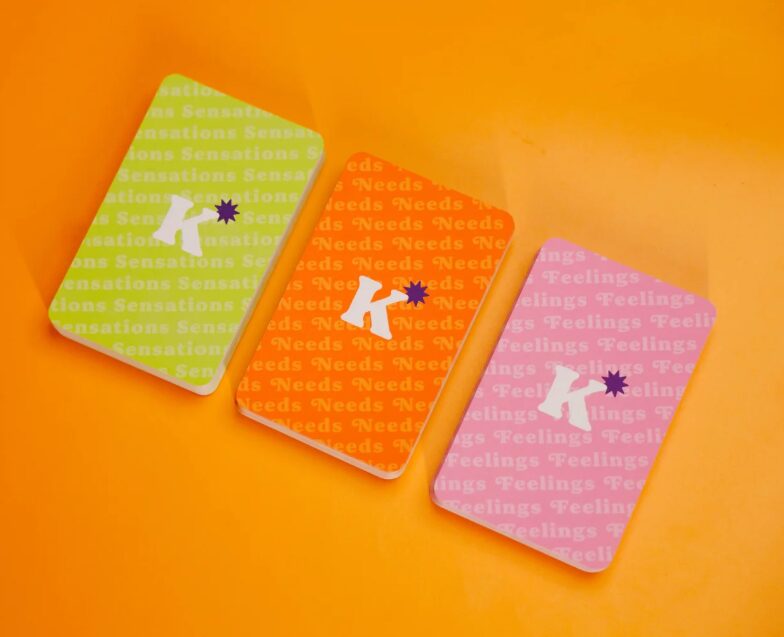
This physicality matters. In a time where mindfulness often migrates into apps and screens, Kidiki emphasizes sensory grounding. The act of touch and sight creates an embodied connection that can feel especially vital for neurodivergent individuals who may benefit from multi-sensory modalities rather than abstract, text-heavy approaches (5).
While it may appear simple, Kidiki is intentionally layered. “On its own, it trains awareness and clarity; through workshops and community, it becomes an ecosystem of cards, practices, and human connection,” David explains. This expansion from tool to practice to community demonstrates a systems-thinking approach, recognizing that individual well-being is inseparable from collective environments (6).
The design is also deliberately open-ended. “There’s no one way to play. There are no rules. It’s emotional LEGO. You bring a question, and Kidiki opens a window back to you,” David notes. The cards are printed on high-quality, 400gsm velvet-finish cardstock, as sensory experience also matters, to make the cards feel grounding.
To David, each piece of artwork embodies depth rather than surface beauty, echoing the artists’ own processes of introspection.
Distinctive features
Several qualities set Kidiki apart from other emotional wellness tools:
- Sensory artistry: Each card carries abstract artwork with color psychology, which David highlights as “opening doors that words alone may not, especially for neurodivergent users.”
- Time-sensitive accessibility: Kidiki is designed for 7-minute check-ins, offering depth without burden.
- Relational orientation: Unlike solo journaling apps, Kidiki was created for both individual and shared use. Couples use it to listen differently, groups to build trust, and therapists to move through conversational stuck points.
- Stigma-lightening playfulness: Kidiki intentionally avoids the heavy connotations that sometimes surround therapy.
A mind-body bridge
What is perhaps most radical about Kidiki is its sequencing from sensations to feelings to needs. This mirrors the way the nervous system processes experience, ensuring that insights are not only cognitive but also embodied. In trauma studies, linking bodily cues with emotional vocabulary is increasingly recognized as a cornerstone of healing and regulation (7).
User journeys and stories of transformation
While Kidiki’s philosophy and design ground it in clarity, its true impact emerges in lived encounters. From intimate couple conversations to community retreats, the cards become more than tools; they become catalysts.
David recounts: “One story: a 19-year-old picked ‘mourning’ from the Needs deck while playing with his girlfriend. She was confused; she’d just returned from Germany. He resisted at first, then admitted he hadn’t been home when his grandmother died, and it haunted him. Simply naming ‘mourning’ opened a floodgate. His girlfriend held his hand, and they left closer.”
What stands out here is the moment of honesty and Kidiki’s gentle doorway into vulnerability.
This and other stories also illustrate a recurring theme David notices: “Users often ask for more words. People who once knew only five words for emotions now want 300 cards. That hunger itself is proof of how Kidiki is working.” This observation underscores a core issue in both education and mental health: the scarcity of emotional vocabulary. Emotional granularity, the ability to differentiate between similar emotions, has been linked to improved emotional regulation and resilience (8).
For neurodivergent individuals, especially those who experience alexithymia (difficulty in identifying and describing emotions), structured vocabulary expansion can be a lifeline (9). Through linking words with sensations and needs, Kidiki deepens expression into recognition and transforms confusion into clarity.
Both stories also demonstrate trauma-informed principles in practice. The choice-based engagement (selecting words at one’s own pace), the absence of judgment, and the presence of witnessing (a partner, a friend, a group) together create a safe enough space for deeper truths to surface. Through these user journeys, Kidiki moves from being a structured practice to becoming a relational bridge.To choose a card is to open a window, one that looks inward, outward, and toward the collective movement of change
Kidiki is soon expanding into schools and colleges, with David launching Kidiki Training Sessions in psychology departments in colleges, starting with Kochi this November. Workshops and retreats are also on the anvil, along with conscious dating events.
These formats extend Kidiki beyond the solitary or dyadic into community-based circles. Looking further, David’s aspiration is to move Kidiki beyond urban English-speaking audiences and make the decks available in regional languages across India.
Opening worlds
David’s closing words encapsulate Kidiki’s ethos.
“Kidiki isn’t a game you have to play ‘right’- it’s a window. A 7-minute tool that can open lifelong doors.”
This journey reveals a consistent thread: slowing down to listen. In a world where acceleration is the norm, Kidiki insists on pausing, on noticing sensations, differentiating feelings, and naming needs.
References
- Rosendahl, S., Sattel, H., & Lahmann, C. (2021). Effectiveness of Body Psychotherapy. A Systematic Review and Meta-Analysis. Frontiers in Psychiatry, 12, 709798. https://doi.org/10.3389/fpsyt.2021.709798
- Kinnaird, E., Stewart, C., & Tchanturia, K. (2018). Investigating alexithymia in autism: A systematic review and meta-analysis. European Psychiatry, 55, 80. https://doi.org/10.1016/j.eurpsy.2018.09.004
- Dignath, C., Veenman, M.V.J. The Role of Direct Strategy Instruction and Indirect Activation of Self-Regulated Learning—Evidence from Classroom Observation Studies. Educ Psychol Rev 33, 489–533 (2021). https://doi.org/10.1007/s10648-020-09534-0.
- Practical Guide for Implementing a Trauma-Informed Approach (builds on SAMHSA TIP 57) — PDF version:
https://cilacademy.org/wp-content/uploads/2023/10/Practical-Guide-for-Implementing-a-Trauma-Informed-Approach.pdf. - Siemann, J. K., Veenstra-VanderWeele, J., & Wallace, M. T. (2020). Approaches to Understanding Multisensory Dysfunction in Autism Spectrum Disorder. Autism Research : Official Journal of the International Society for Autism Research, 13(9), 1430. https://doi.org/10.1002/aur.2375.
- Ungar, M., Theron, L., & Höltge, J. (2023). Multisystemic approaches to researching young people’s resilience: Discovering culturally and contextually sensitive accounts of thriving under adversity. Development and Psychopathology, 35(5), 2199-2213.
- Van der Kolk, B. (2014). The body keeps the score: Brain, mind, and body in the healing of trauma. New York, 3, 14-211..
- Kashdan, T. B., Barrett, L. F., & McKnight, P. E. (2015). Unpacking emotion differentiation: Transforming unpleasant experience by perceiving distinctions in negativity. Current Directions in Psychological Science, 24(1), 10-16..
- Keith, J. M. (2021). Self-Regulation Processes Underlying Social Motivation Differences in Children with ASD: The Influence of Social Context. University of Rochester..
- Pasarín-Lavín, T., García, T., Abín, A., & Rodríguez, C. (2024). Neurodivergent students. A continuum of skills with an emphasis on creativity and executive functions. Applied Neuropsychology: Child, 1-13..
- Symonds, A. K. (2024). Beyond Labels: Towards Non-Pathologising Care for Trauma Victim-Survivors (Doctoral dissertation, University of Leicester)..
- Van Lith, T., Cornwall, E., Gerber, N., He, A., & Centracchio, M. (2025). Visual narratives as evidence: Surveying the role of metaphors in art therapy. The Arts in Psychotherapy, 102296..
- Kohrt, B. A., Asher, L., Bhardwaj, A., Fazel, M., Jordans, M. J., Mutamba, B. B., … & Patel, V. (2018). The role of communities in mental health care in low-and middle-income countries: a meta-review of components and competencies. International journal of environmental research and public health, 15(6), 1279.