Beneath all the giggles and jiggles, childhood has its fair share of hurt, uncertainties, and even stress. In children, stress can manifest through various symptoms such as changes in behavior, increased irritability, trouble sleeping, physical manifestations like headaches or stomach aches, or even regression in previously acquired skills or behaviors. From struggling to adjust to new environments to managing school and peer pressures or problems at home, adverse events are simply unavoidable.
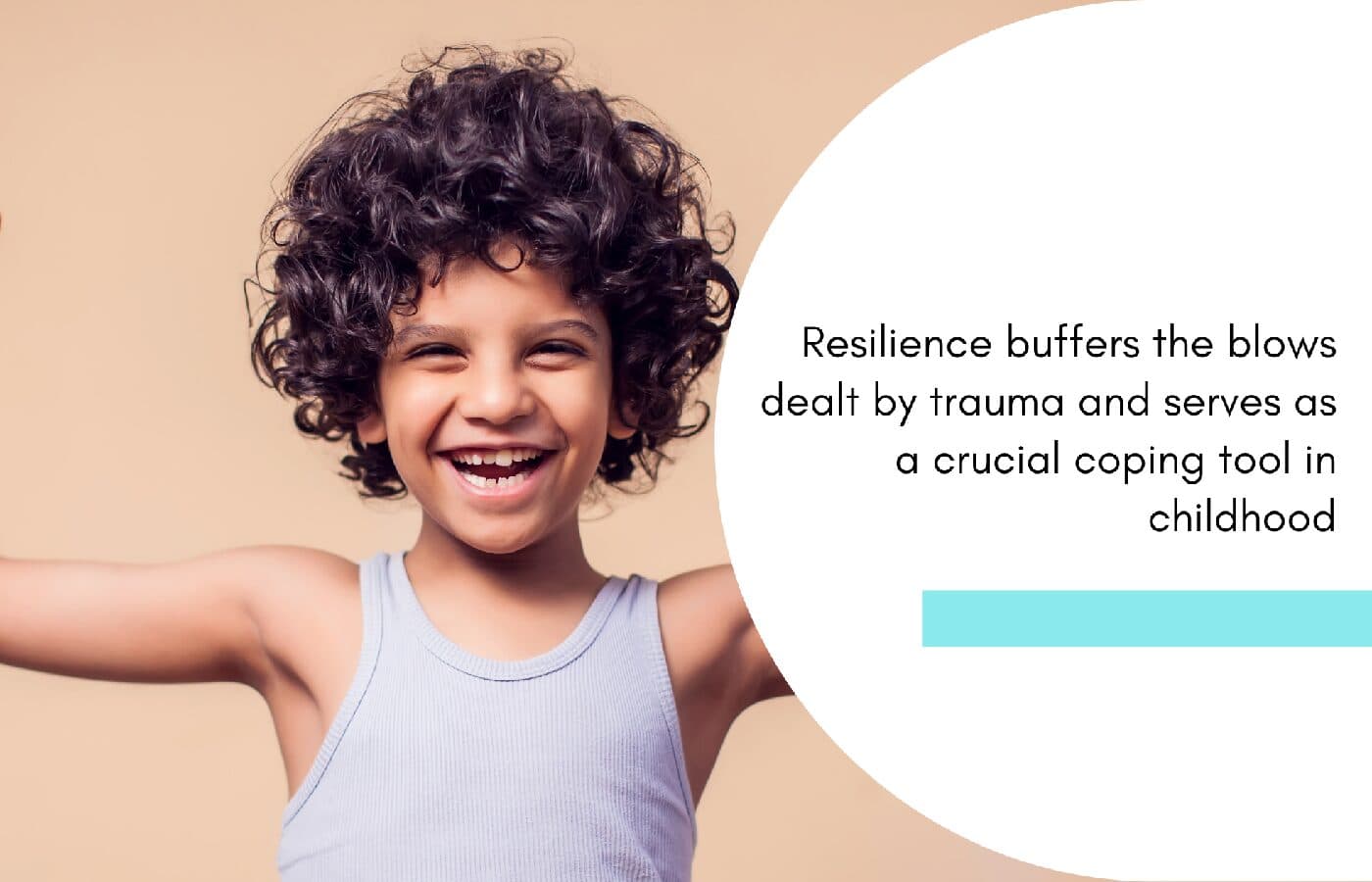
However, parents can empower kids by nurturing resilience – the ability to adapt well during difficult times. Resilience buffers the blows dealt by trauma and serves as a crucial coping tool in childhood.
Parents serve as anchor chains, cultivating resilience through bonds built on trust to help the child endure tumultuous times. Their support equips kids with coping tools they can cling on to in stormy seas, providing navigational skills guiding the child’s course ahead.
What is resilience?
Parents often use the term “resilience” casually to describe the attributes of those children who tend to “bounce back” after facing problems. However, resilience does not emerge randomly or automatically; it is cultivated consciously through specific evidence-based strategies embedded in childhood.
At its core, resilience provides psycho-emotional tools enabling positive functioning when confronted with crises, such as teaching children to adapt to challenges and bounce back from setbacks—for instance, a child learning to cope with the stress of moving to a new school by making new friends and finding new routines.
The ability to cope with adversity may come naturally to some children, but nurturing relationships and an intentional culture that encourages adaptability, contribution, and growth mindsets can cultivate resilience, regardless of innate characteristics.
Let’s take a look at some of the ways parents like you could use to nurture resilience in children:
#1 Foster meaningful connections
Humans are wired for relationships. Forming secure attachments early in life lays the foundation for self-esteem and trust.
As clinical psychologist Dr. Kaylene Henderson notes, “Connection is vital for building the self-confidence and security kids need to stand on their own two feet.”

Spend at least 15 minutes daily of one-on-one time with your child, with all gadgets switched off, and engage with their world. Get on their physical level, ask open-ended questions, validate feelings, and practice reflective listening techniques when they share opinions and problems—model healthy conflict resolution by apologizing calmly after arguments.
Encourage friendships and show interest in their peers, but don’t be a helicopter parent—set them free, and let them breathe. Research reveals that children with positive social networks demonstrate higher resilience when faced with crises, in part because they feel valued by others.
#2 Learn to label emotions
Emotional flexibility is central to resilience, as per a 2021 study in Frontiers of Psychology.
Oftentimes, children need help identifying and expressing in an appropriate manner the wide range of their feelings. Validate all emotions as normal and refrain from rushed judgment. Distinguish between thoughts, feelings, and behaviors so kids own their experiences but don’t act recklessly.
Use emotional vocabulary and ask, “I wonder if you might be feeling frustrated?” rather than “Why are you throwing a tantrum?”.
Use visual aids like feelings charts, and practice rating emotional intensity from 1 to 10. Talk about overwhelming feelings as waves that rise and fall, and make them understand that no feeling is permanent.

Guide them in de-escalation techniques like mindful breathing, imagery, and taking breaks to recalibrate when emotions surge. Teaching mindful breathing techniques to children equips them to calm down and relax their minds during a crisis. Use and encourage refined vocabulary to help the child describe complex emotions such as relief, joy, hopelessness, jealousy, etc. It can be helpful to incorporate these minor adjustments to help the child feel calm and balanced when experiencing complicated emotions.
#3 Promote problem-solving
Life is full of challenges and risks worth taking. Rather than over-intervening, allow children to struggle productively on their own. Resist the urge to swoop in and fix all their problems.
Ask reinforcing questions like “I wonder what options are available?” to prompt children to brainstorm solutions on their own, as well as with peers. Guide them to weigh options objectively, implement a plan, learn from mistakes, and try again.
Start small, if needed—but incrementally let them take the reins and gain mastery over their losses and celebrate their wins.
Praise the efforts rather than the outcomes. Using growth mindset language shows kids that intelligence isn’t fixed. Model optimism and show that setbacks are opportunities masked as obstacles.
#4 Develop healthy coping habits
Self-care is the fuel that powers resilience in children (and adults, too). Make it fun by involving your child in creating a tailored wellness vision board. Help them pinpoint simple practices that light them up emotionally and soothe them by reducing stress.
Some such activities may include movement breaks, listening to uplifting music, creative expression through their choice of art, reading inspirational quotes or books, spending time in nature, or playing with pets.
Building consistent renewal rituals prevents burnout, especially during difficult periods. Set a collective example by maintaining healthy sleep routines, nutrition, and exercise. Help kids recognize that taking good care of our minds and bodies keeps us grounded when adversity strikes.
#5 Encourage active collaboration and contribution
Studies show that helping others increases happiness, life satisfaction, and self-esteem, which in turn, fortify resilience. Encourage your child to act with kindness toward all and to pitch in at home from an early age so they feel empowered. Identify causes aligned with their unique individual talents and interests.
Volunteering or contributing to society along with your child nurtures compassion and connectivity.
Combining contribution with collaboration might include writing cheerful letters to veterans or making artwork to brighten hospital rooms. Enable kids to see their actions have power and purpose.
#6 Model resilience
Eventually, it all boils down to showcasing and modeling resilience as a parent to your kids to make them truly read between the lines.
Be transparent and share vulnerable moments. It is important to discuss healthy boundaries to prevent emotional depletion and to ensure that resilience endures for a long time.

Whenever children experience meltdowns, suppress the urge to fix the situation or scold them. Instead, be ‘the calm’ during their storms.
Guide problem-solving questions without hijacking agency to determine the child’s direction. Share similar memories, thereby normalizing fallibility. Show how to seek wise counsel, reset resilience reserves, and then continue sailing ahead.
Bonus tip: Impart flexibility and encourage growth
Life is ever-changing and often unpredictable. While routine lends stability, over-structuring and strict rules can backfire, causing children to rebel in transition.
Provide an anchor through predictable family rituals like weekly outings, while keeping the options flexible enough to roll with surprises. Model optimism and curiosity by welcoming new adventures.
Remember to convey that mistakes are okay as they prompt valuable learning. Reinforce that all feelings are temporary, and circumstances can improve, building hope and determination.
Remember, resilience is not about shielding them from difficulties, but about empowering them to face challenges confidently. By instilling flexibility, encouraging growth, and reinforcing that mistakes are learning opportunities, parents can help children cultivate resilience that will carry them through any adversity.
Like a tree standing tall in the middle of a storm, resilience enables children to weather life’s challenges and grow stronger with each passing moment.