Ever heard of helicopter parenting? The term was first featured in the 1969 book “Between Parent and Teenager,” where a teenager used it to describe his mother who hovered over him like a helicopter.

Nishtha Budhiraja, a Child Psychologist and Adult Psychotherapist, describes helicopter parenting as a style where one or both parents hover over their children, keep a close eye on every move, and are overprotective.
Madeline Levine, a psychologist who wrote the book Teach Your Children Well, described helicopter parents as parents who are “hyper-present” physically but absent psychologically.
Why do parents become helicopter parents?
There is no one reason why parents become helicopter parents. It can be because of a desire to help their children succeed and stay ahead in the “race” of life. It can be out of love or to protect them. Nishtha adds, “It can be because of several reasons. However, it usually develops due to deep-seated insecurities in a parent or a traumatic event in the parent’s life. Sometimes it can be due to dysfunctional emotional regulation in the parent.”
Some of the common reasons include the following.
Overcompensation
Parents who felt unloved or neglected and whose emotional needs were unmet during childhood might overcompensate once they become parents. The desire to ensure their children don’t feel the same way may result in giving their children excessive attention or controlling their lives.
Anxiety
Parents are often attached to their kids’ emotional states. If the kid is hurt, they are hurt; if their kid is happy, they are happy. They become anxious at the thought of their children getting hurt and want to protect them from disappointments and mistakes. A 2022 systematic review of helicopter parenting reported a direct connection between helicopter parenting and anxiety and depression symptoms.
Desire to help
Parents don’t want their kids to face failure, struggles, disappointments, or sadness and may shield them from anything that can cause these feelings. Instead of teaching their children how to handle these feelings, parents tend to focus on preventing their children from ever coming into contact with them.
Consequences of helicopter parenting
Though helicopter parenting might be a result of good intentions and love, it can have negative impacts in the long term. “Some children may develop narcissistic tendencies. Anxiety also tends to be very common in these children as they are constantly under the scrutiny of their parent(s). They are more vulnerable to mental illness as they learn dysfunctional coping skills growing up. They also are more likely to choose toxic relationships and friendships,” says Nishtha.
Codependency patterns
“Children with helicopter parents may develop codependent patterns. They rarely get to make their decisions,” says Nishtha. Codependent children depend on their parents to give them a sense of identity. They never learn to survive and thrive without their parents.
Narcissistic tendencies
Some children develop narcissistic tendencies because they were given everything they wanted as a child and never faced any natural consequences of their actions. They develop an inflated sense of self and impulsivity (Zeynep SET, 2020).
Low self-esteem
Helicopter parents constantly interfere in their child’s life and solve their problems. This can result in the child believing their parents don’t trust them to do anything on their own, which leads to low self-esteem and affects their decision-making and problem-solving abilities.
Dysfunctional coping skills
Over-controlling parents can negatively affect the children’s ability to regulate emotions (Perry, Dollar, Calkin, Keane, and Shanahan, 2018). Helicopter parents protect their children from dealing with struggles, failure, or disappointments. As a result, the child never learns to deal with these emotions and develops dysfunctional and unhealthy coping mechanisms.
How to not become a helicopter parent?
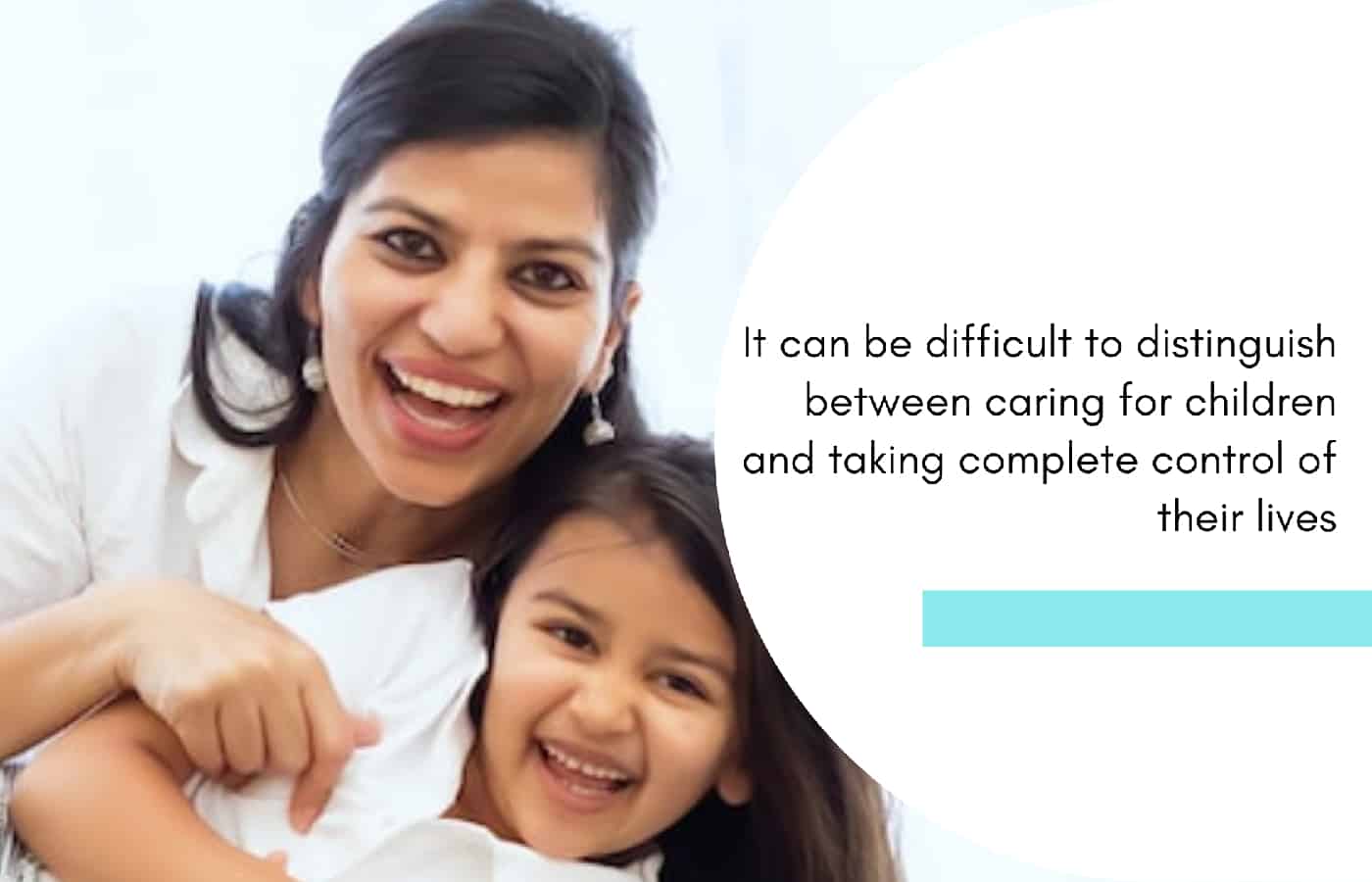
Parents may not realize they are helicopter parents. It can be difficult to distinguish between caring for their children and taking complete control of their lives. “Culturally, children are expected to be obedient. This makes it harder to raise awareness in India,” says Nishtha.
One way that Nishtha recommends is to see the children as free-thinking humans in the making rather than fragile beings in need of constant protection and care. This means allowing them to struggle, giving them the space to grow, and letting them face the consequences of their actions. Be supportive without being controlling, allowing them to make their decisions, teaching them how to resolve conflicts and regulate their emotions, and most importantly, no matter how hard it is, letting them “fail.”
There is no one answer on how to be a good parent. It is not hovering over your child and making them completely dependent. And most certainly not following what your parents did. It’s natural to protect your kid from disappointments and sadness. Nilom Shah, a Psychotherapist and Child Psychologist, advises, “Undo and unlearn everything you learned from your parents. It is not necessary that what worked for you will work for your children as well. Don’t be in complete control, but don’t be completely helpless, either. And have that willingness to learn and adjust according to your child’s needs.”