
What happens when you’re raised to believe that struggle should be silent? That pain is yours to bear alone? That being unseen and unheard is just how life works?
Mental health care wasn’t designed with South Asians in mind. The stigma. The silence. The expectation to “just deal with it.” For many, therapy feels foreign- rooted in Western ideals, detached from cultural realities.
Misha Akbar, 44, is changing that.
As the founder of Sama Health, she isn’t just offering mental health support. She’s rewriting the script. Making therapy feel familiar. Ensuring South Asians in the UAE see themselves reflected in the process.
Born and raised in the UAE, with years spent moving across Saudi, Misha has lived the quiet struggles firsthand. She’s seen how shame keeps people from seeking help, how conversations stall before they even begin. And in her own journey, she found the strength to break the silence.
Now, she’s building something different: a space where mental health isn’t taboo, where vulnerability isn’t weakness, and where no one has to suffer in silence.
Because healing shouldn’t feel like a fight against your own culture.
Turbulent roots
Misha grew up in a strict Muslim household where control and love were often indistinguishable. Her father wielded silence like a weapon—cold, isolating, unyielding. The weight of it wore her down.
In 11th grade, she failed a subject. To many, it is just a setback, but for Misha, it was proof of her inadequacy. The crushing pressure from her father made her feel like she had no way out. In a moment of despair, she attempted to take her life. But even then, the focus in her family wasn’t on her pain. The narrative wasn’t about her suffering—it was about how to “fix” her, to make her “better.” Mental health was rarely discussed, especially in households like hers.
That night could have been the end of her story. Instead, it was the start of something else.
A cry for help
Even after leaving home, the weight of her past followed, a dark forever shadow. She buried it under responsibilities until motherhood forced her to confront it again.
After the birth of her first child in the U.S., far from home, Misha began to experience symptoms of postpartum depression. But without a name for it, she dismissed it as exhaustion, something temporary. The strain seeped into her marriage, and by the time Misha had her second child, the fractures had deepened. Then came the breaking point. Alone at home, overwhelmed, and drowning, she attempted to end her life once again.
This time, her husband urged her to seek help.
Misha tried therapy. But therapy wasn’t just about talking—it was about finding the right person. Someone who understood what it meant to grow up in a brown family, where love and control often blurred into one. In the West, mental health conversations centered around boundaries and self-care, but those ideas felt foreign.
It wasn’t until the COVID-19 pandemic that she found a therapist who truly understood—a woman raised in the Middle East, familiar with the cultural complexities that shaped Misha’s struggles. With time, therapy became transformative. It helped her set boundaries, navigate relationships, and, most importantly, change how she saw herself.
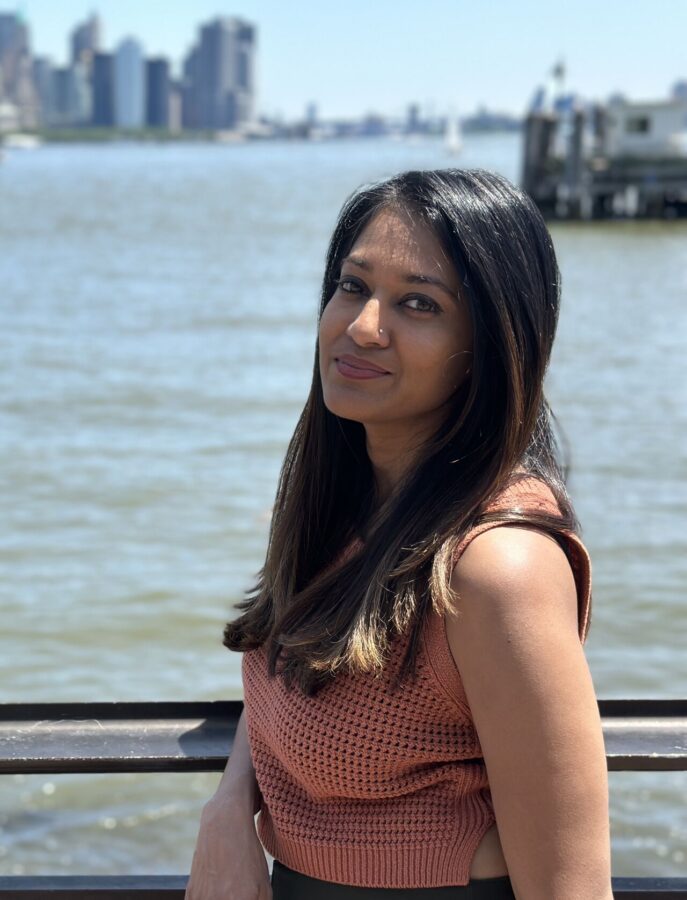
In her healing, Misha realized something critical: she wasn’t alone. An entire community was struggling in silence, too.
Sama Health – The space she once needed
During the pandemic, the UAE government began prioritizing mental health initiatives, but most resources catered to Arabic speakers or Western expats, leaving South Asians – the second-largest expat group without adequate support. As online therapy gained traction, many in her community turned to therapists in India—not by choice, but out of necessity. Even then, finding someone who truly understood the expat experience was rare. With unclear licensing regulations and a fragmented system, South Asians often didn’t know where to go for help
That’s when Misha saw the need for something different. She knew she wasn’t the only one who had felt neglected by her family, dismissed by society, and left to battle her demons alone. She wanted to create a space for her community- one that understood the quiet suffering of South Asians in the UAE and made mental health support accessible.
In 2021, Sama Health was born – not just as a mental health platform but as a bridge for South Asians who felt unseen in a system that wasn’t built for them. Sama Health acknowledges the weight of stigma, family expectations, and the silent struggles that keep people from seeking help. A large part of Sama Health’s promises of affordability and accessibility are rooted in the fact that the platform makes online therapy more within reach than in-person alternatives.
“For us at Sama Health, therapy isn’t just about treatment—it’s about feeling seen,” Misha says.
Sama Health removes the guesswork from finding culturally competent therapists, making mental health support affordable and accessible. Misha speaks openly about her own journey—the years it took to unlearn, heal, and rebuild.
She laughs, “I might leave my husband, but I’m never leaving my therapist.”
Therapy, for Misha, is not one-size-fits-all, and her own experience proves this. Sama Health offers therapy, journaling, movement, and creative outlets so people can find what truly resonates with them.
Today, as Misha pursues a master’s in neuroscience, her commitment to deepening her knowledge and expanding mental health care for her community is clear. She’s breaking down the barriers to care and creating even more accessible pathways to healing. But perhaps most importantly, she’s showing others that they too can heal and grow, because, as Misha believes: no one should have to face their demons alone.
Sama Health is more than just a mental health platform—it’s the embodiment of Misha’s own journey, a testament to resilience, and the story of a woman who once felt invisible but now ensures others are never felt unseen again.