It was a friendship that grew into a lifeline.
When Nida and Sheena first met as schoolgirls in Dubai, they didn’t imagine their lives would one day intertwine to create something that could help children halfway across the world navigate grief, abuse, displacement, or the rumble of an earthquake. But today, their creation, Rocky Books, is doing exactly that: offering children and families not just stories, but lifelines.

Founded in 2021, Rocky Books is a growing series of trauma-informed micro-storybooks designed for children experiencing crisis. Each book pairs a simple, compassionate narrative with a psychological grounding exercise, meticulously tailored to be culturally sensitive and accessible. Available in more than 10 languages, these books address everything from domestic abuse to the aftermath of natural disasters. The two women behind them, Nida Sheriff, a storyteller and activist, and Sheena Vassiliades, a psychologist and family therapist, have built their collaboration on decades of friendship, deep empathy, and a shared conviction: always centre the child.
The seeds of Rocky Books were planted years before the name existed. Nida and Sheena’s friendship spans continents and life stages, from school in Dubai to university in London, and from professional lives in Bangalore to London. Nida trained in film and fell into feminist activism almost by accident, becoming Country Manager for Chayn India, a domestic abuse charity that uses tech to empower survivors, and co-founding the award-winning Snap Counsellors. Sheena, after earning her psychology degree, worked across the prison service, with young people, children, and families, steadily refining her skills in family therapy.
It was a triggering news clip, a little girl in Gaza trembling at the sound of bombs, that pushed Nida from helping adult survivors to imagining something for children. “I wanted to provide a way for children to calm or ground themselves amidst an unstable or frightening environment, something easy to access and understand,” she says. The first person she told was Sheena, in the back of a Bangalore autorickshaw. Sheena didn’t hesitate. “Combining both our professional and lived experience, the partnership could not have been more organic,” she recalls.
The sociologist Mark Granovetter spoke of the “strength of weak ties,”[1] but what Nida and Sheena share is the rarer, sturdier variety, ties that survive distance, evolve through careers, and tighten into purpose.
Building books, grounded in trauma-informed practice
The way they work now is instinctive, almost unspoken. Nida crafts a short story grounded in a child’s reality, parental conflict, bullying, and displacement. Sheena steps into the child’s shoes, designing an evidence-based coping exercise that’s relatable, fun, and rooted in psychological research. Then comes a meticulous review with an illustrator, where every colour, object, facial expression, and font choice is weighed for trauma-informed impact.
Their first four books were born during the pandemic, when domestic abuse rates were climbing. The initial stories reflected that reality: children at home all day with working parents. Crowdfunding was their biggest challenge, but a committed community rallied. Early proof of impact came in unexpected forms, an Instagram comment under their first book, How Rahul keeps calm when he feels anxious: “I’m Rahul.” “That’s when I knew we’d created something survivors could relate to and feel less alone,” Nida says.
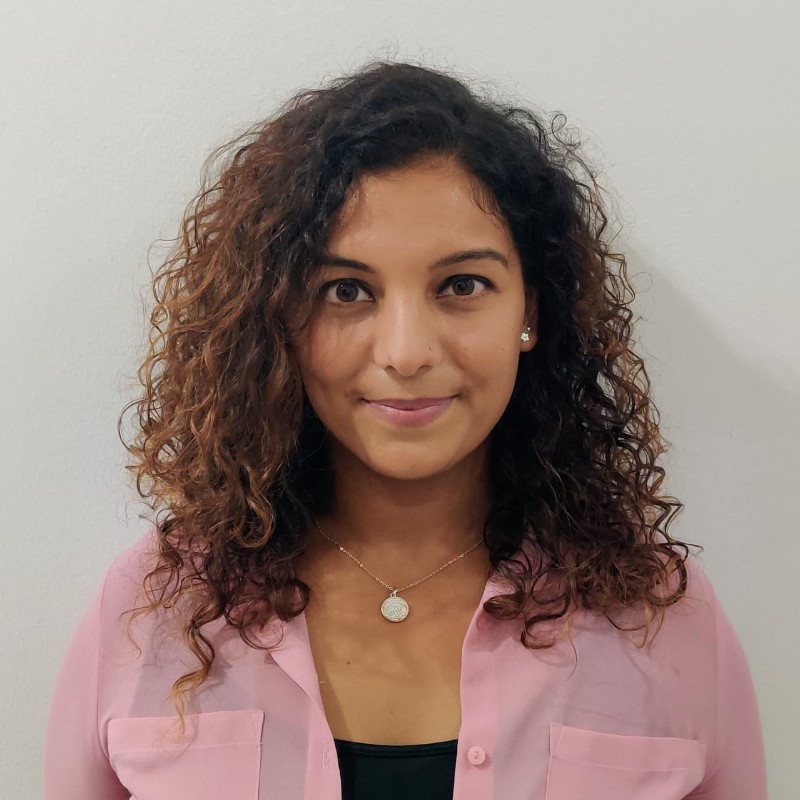
For Sheena, validation came from a qualitative research study: “Younger children were drawn to the gentle illustrations, older kids engaged with the relational issues, and parents reflected with curiosity and appreciation.”
Their experiences align with National Child Traumatic Stress Network (NCTSN)[2] findings that tailored interventions, especially those combining storytelling and creative arts, can deepen engagement and support emotional processing in children affected by trauma.
Choosing what stories to tell
While domestic abuse remains their focus, the duo also responds to global crises. After the Syria and Türkiye earthquakes, they produced trauma-support books in relevant languages, aided by volunteer translators. The reach is wide: one Turkish edition was used to support a young asylum seeker in the UK.
Closer to home, they’re equally determined to tackle “normalized” traumas cultures prefer to ignore, gaslighting, grief, and everyday adversity, determined to break cycles of generational harm.
“We have had to be bold in story writing and intervention planning with the goal of educating families about the generational trauma we pass on,” Sheena says.
Their approach recalls Judith Herman’s assertion in Trauma and Recovery that healing often begins with naming the harm, especially when it’s been culturally silenced.[3]
Language as a bridge, not a barrier
Cultural sensitivity isn’t an afterthought; it’s in their bones. Both are Third Culture Kids, comfortable with shifting cultural codes. They source translators who understand local dialects, like Syrian Arabic, and believe that cross-cultural empathy is part of healing. “If a child in Paris reads about Ali in Bangalore facing the same struggle, it might help them feel less alone,” says Nida.
This belief mirrors UNESCO’s research on multilingual education, which underscores how culturally relevant materials enhance both comprehension and emotional connection in young readers.[4]
Crafting for healing, not just reading
The writing itself is guided by trauma-informed principles. Nida explains: “We assume the reader has experienced trauma. Every word choice becomes important because trauma can change the way the brain processes information. Sentences are simple, but each has to be meaningful.” Sheena often fine-tunes vocabulary to keep the text both accessible and safe.
Her own process for exercises is equally intentional. She examines the child character’s age, personality, and circumstances before tailoring an activity that transcends words and works across cultures. For Ali, a football lover, she created a dribble ball exercise: physically engaging, dopamine-boosting, and grounding, using the joy of sport to channel energy and acknowledge feelings.
Bessel van der Kolk’s The Body Keeps the Score explores how physical activity can anchor emotional regulation in trauma recovery, a principle embedded in Sheena’s exercises. [5]
A community effort

Partnerships have been key. Illustrator Arpita Sawant has been with them since book one, also designing their website and advising on printing. They’ve collaborated with low-income schools in Pakistan, where teachers are launching mental health programmes. “These are the people we love to work with,” Nida says. They’ve also benefited from pro bono help, like trauma researcher Jenny Winfield and Clicky Media on SEO, which they describe as “Champions” in their corner.
Their network feels less like a supply chain and more like a grassroots movement, each contributor adding a thread to the safety net these books aim to be.
Looking ahead with evidence and empathy
Sheena is leading a longitudinal study to measure the books’ impact over time, tracking baseline and follow-up data, refining interventions, and building an outcomes-based portfolio to support scaling.
For Nida, books are both practical and personal. With her film background, she knew the high costs of audiovisual media; books are portable, low-tech, and intimate. “There’s something special about a child discovering a Rocky Book’s message by themselves or with a parent,” she says. She even finds grounding in the slow work of typesetting multilingual editions, picturing the child who will hold the book.
The emotional load of this work is heavy, but they lean on each other. “I don’t know how solo founders do it,” Nida admits. “Being a founder is humbling; you learn quickly that you don’t know as much as you thought.” Sheena, a working mother of two, values their “unspoken understanding” and ability to communicate openly about strengths, weaknesses, and when life needs to take priority.
The Harvard Centre on the Developing Child emphasizes the role of stable, supportive adult relationships in buffering the effects of childhood adversity, something mirrored in the founders’ own support for each other. [6]
This openness extends to their ethics. When developing stories about sensitive events, they comb through every detail to avoid re-traumatisation, right down to punctuation. They acknowledge they can’t guarantee a reader won’t be triggered, so each book includes a user guide, conversation prompts, and crisis contacts.
“We aim to be culturally mindful and sensitive in every aspect,” Sheena says.
Her background in forensic psychology and family therapy helps dismantle the myth that children will “just be fine” after trauma, drawing on theories like Maslow’s hierarchy and decades of practice to shape interventions that translate across age and culture.[7]
Closing the book, for now
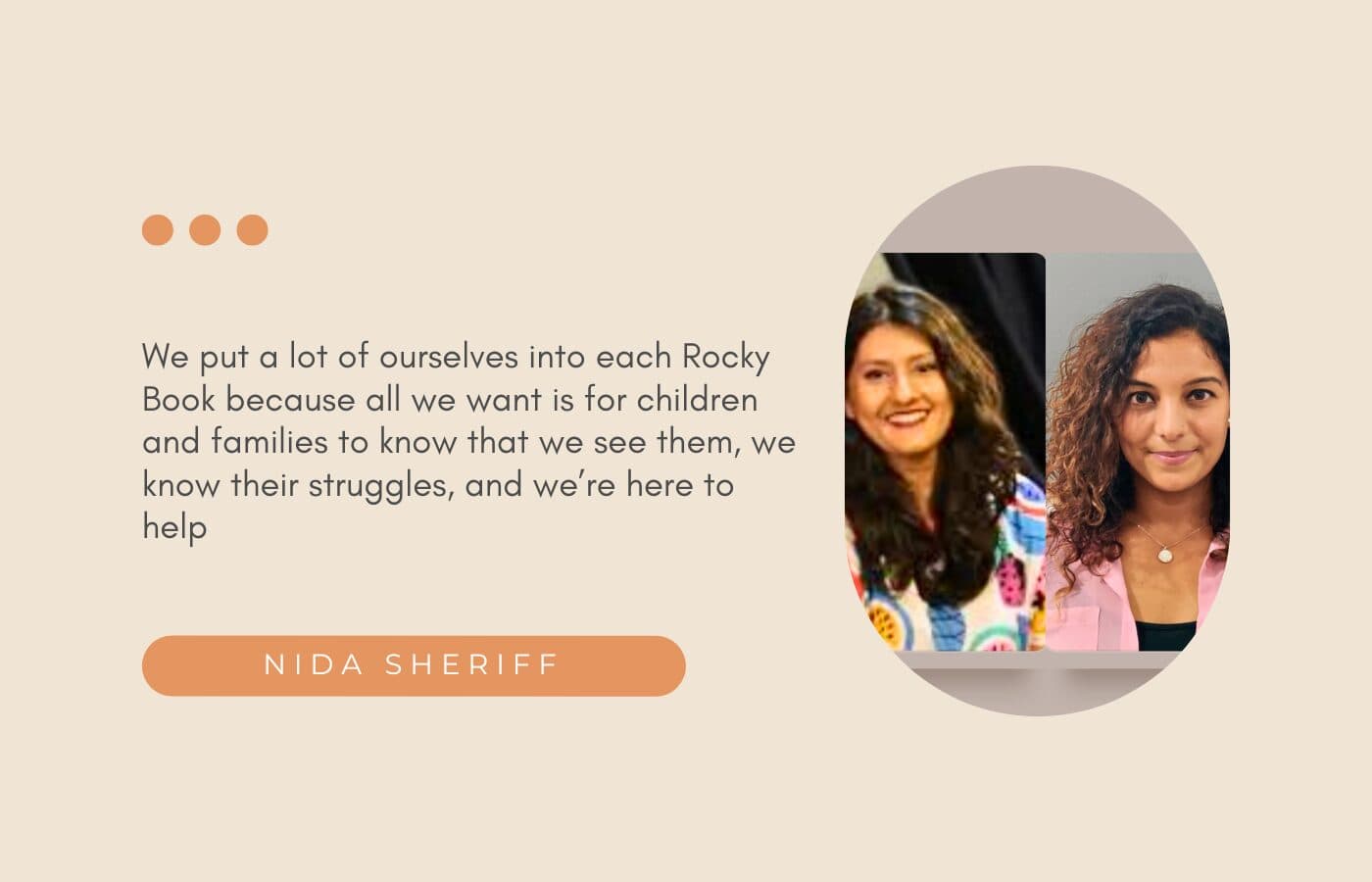
Perhaps the best summary of their mission comes in their own words. “We put a lot of ourselves into each Rocky Book because all we want is for children and families to know that we see them, we know their struggles, and we’re here to help,” Nida says. Sheena is more succinct: “Our mission is to centre the children while breaking the cycle of generational trauma.”
They are, in many ways, re-authoring the narrative of childhood resilience, not as something innate and unexamined, but as a skill that can be nurtured, practiced, and supported. As Bessel van der Kolk reminds us in The Body Keeps the Score, healing is rarely about “getting over it” but about creating safe pathways to reconnect with self and others.[5] Rocky Books offers those pathways in the form of stories and exercises a child can return to again and again.
Resilience, as they frame it, isn’t just something children “have” but something you help them build, story by story, page by page.
If you’re a parent, teacher, aid worker, or simply someone who believes children deserve to feel safe, connected, and understood, visit rockybooks.co.
References
- Granovetter, M. (1983). The strength of weak ties: A network theory revisited. Sociological theory, 201-233.
- Cook, A., Blaustein, M., Spinazzola, J., & van der Kolk, B. (Eds.) (2003). Complex trauma in children and adolescents. National Child Traumatic Stress Network.
- Trauma and Recovery Judith Herman, M. D. New York: Basic Books, 1992
- What you need to know about multilingual education
- Van der Kolk, B. A. (1994). The body keeps the score: Memory and the evolving psychobiology of posttraumatic stress. Harvard review of psychiatry, 1(5), 253-265.
- Harper, F. D., Harper, J. A., & Stills, A. B. (2003). Counseling children in crisis based on Maslow’s hierarchy of basic needs. International Journal for the Advancement of Counselling, 25(1), 11-25.