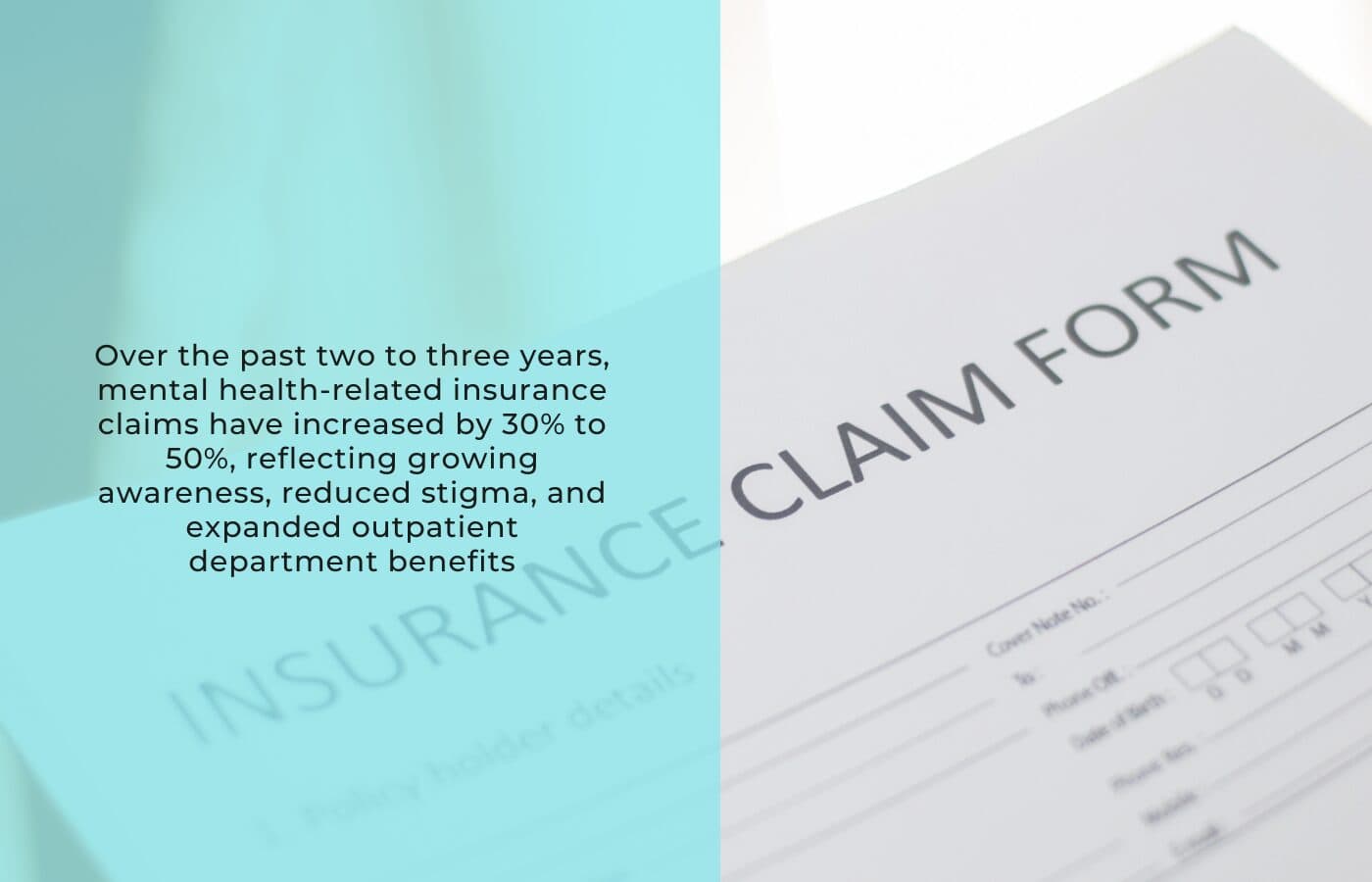
India is experiencing a significant transformation in attitudes toward mental health, as evidenced by a recent Policybazaar report showing a dramatic rise in both interest and claims for mental health insurance. Over the past two to three years, mental health-related insurance claims have increased by 30% to 50%, reflecting growing awareness, reduced stigma, and expanded outpatient department (OPD) benefits.
The report opines that a marked increase in public understanding of mental health issues has led more people to seek insurance coverage and support. Especially in urban areas, conversations about mental health are becoming more open, encouraging individuals to seek help without fear of judgment.
Insurers now offer more comprehensive plans that cover therapy sessions, psychiatric consultations, and prescribed medication, making mental health care more accessible.
Who is leading the change?
Young Adults (25–35): This age group is at the forefront, showing the highest search interest, policy adoption, and claims. Unique stressors such as work-life imbalance, financial insecurity, and job changes make them particularly proactive in seeking mental health support.
Women: Women are 27% more likely to enroll in mental health coverage, reflecting increased recognition of stressors related to reproductive health and caregiving roles.
Urban Professionals: Tier 1 cities account for 50–55% of mental health insurance uptake, driven by higher disposable incomes, easier access to therapists, and more progressive corporate policies.
Nature of claims
The Policybazaar report highlights that most claims are for mild to moderate conditions:
- Anxiety disorders: 30%–35% of claims
- Depression (including dysthymia): 25%–30%
- Workplace stress and burnout: 20%
- Insomnia and adjustment disorders: 5%–10%
- Other severe disorders (bipolar, PTSD, OCD): Less than 5%.
Therapy and counseling are the most common uses of OPD benefits, but there is also a notable increase in claims for psychiatric consultations and medication, indicating broader acceptance of clinical mental health care.
Life events as triggers
Major life changes, such as career pressure, job relocation, financial responsibilities, caregiving, and post-retirement challenges, often trigger first-time claims. While post-retirement claims remain low, possibly due to stigma and digital barriers, these trends highlight the impact of life transitions on mental well-being.
The Insurance Regulatory and Development Authority of India (IRDAI) has played a pivotal role by mandating mental health coverage in health insurance policies since March 2023, further legitimizing mental health as a critical component of overall well-being.
Siddharth Singhal, Head of Health Insurance at Policybazaar, encapsulates the shift, “Mental health is no longer an afterthought when it comes to insurance-it’s becoming a priority. Our latest data shows a remarkable 41% surge in mental health insurance searches, driven by young adults, women, and those in high-stress professions. This points to a larger societal shift where people are not only more aware of mental well-being but are actively seeking financial protection for it.”
Perhaps, it’s not too early to hope that this is a positive shift toward improved mental well-being outcomes in India. With greater awareness, expanding coverage, and a more supportive societal environment, mental health is moving to the mainstream of healthcare planning.