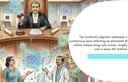

In a watershed moment for Indian education, the Supreme Court has issued a sweeping set of 15 guidelines for all educational institutions—schools, colleges, coaching centers, hostels, and universities—in response to a deeply troubling surge in student suicides nationwide.
Over 13,044 student suicides are reported annually in India, and roughly one student is lost approximately every 40 minutes. Student suicides now constitute over 7.6% of all suicides in the country. The problem is not only growing but outpaces the general suicide rate, with student suicides having increased at twice the rate of overall suicides (4% vs. 2% annually over the last decade).
The burden falls disproportionately on a handful of states. Maharashtra leads with 1,764 (14%) student suicides in 2022, followed by Tamil Nadu (11%), Madhya Pradesh (10%), Uttar Pradesh (8%), and Jharkhand (6%). These five states account for nearly half of all student suicides.
Academic pressure, exam failures, social isolation, and lack of support are cited as the main drivers. For example, in 2022, 2,248 suicides were directly linked to exam failure.
The Supreme Court’s mandates: what’s new and why it matters
- Mandatory, uniform mental health policy: all institutions must adopt and publicly share detailed mental health policies, drawing on national best practices such as the Manodarpan, National Suicide Prevention Strategy, and Understand, Motivate, Manage, Empathise, Empower, Develop (UMMEED) initiatives. These must be updated yearly and remain visible to all stakeholders.
- Professional mental health presence: qualified counselors, psychologists, or social workers are now required for every educational institution with 100 or more students. Smaller institutions must establish formal referral systems to external mental health professionals.
- Ongoing staff training: teachers and non-teaching staff will now undergo systematic training at least twice a year in mental health first aid, suicide prevention, crisis intervention, and supporting students from vulnerable groups.
- Robust grievance redressal systems: all institutions, including private coaching centres, must put in place comprehensive and confidential grievance mechanisms and student protection norms. There is no place for harassment, bullying, or negligence to slip through the cracks.
- District-level oversight: implementation and enforcement are to be closely monitored by district-level committees, typically headed by the district magistrate, with powers to inspect and audit compliance.
- Swift referral protocols: institutions must create, publicize, and execute clear, written protocols to refer students to mental health services, medical care, or suicide helplines such as Tele-MANAS without delay.
- Support for families: institutions are tasked with extending psychological and career counselling to parents as well as students, ensuring a holistic support ecosystem.
- Physical safety measures: residential facilities are now required to install tamper-proof fan devices, restrict access to rooftops and balconies, and take other engineering controls to reduce means of impulsive self-harm attempts.
- Regulating academic pressure: Educational institutions including coaching centers are now required to stop segregating batches based on academic performance and be aware of each student’s individual capacity when assigning academic tasks.
Why it is a game-changer
These directions are legally binding across India until Parliament enacts a specific law. For too long, student mental health initiatives and institutional accountability have been piecemeal, voluntary, and hamstrung by stigma or lack of political will. This order fundamentally changes the landscape by making student well-being a matter of enforceable law and public accountability.
The way forward
The Supreme Court has not only highlighted the legislative and regulatory vacuum but has also filled it, at least temporarily, with actionable, time-bound directives. While these will require vigilant enforcement and continued advocacy, India now has a framework that was once only dreamed of by students, parents, teachers, and mental health professionals alike.