“The key to managing anxiety among employees is to focus more on humanizing the workplaces and creating safer spaces. This will help the employees bring their whole authentic selves to work”
Workplaces are all about people. And people, as we know, aren’t immune to stress, anxiety, or the weight of life’s complexities. Yet, for far too long, conversations around mental health at work have been relegated to the sidelines.
At MyndStories, we’re interested in the real, raw, and actionable ways organizations can shift this narrative. That’s why we sat down with Panini Balaji, a leader who’s spent over two decades redefining what it means to build human-centric workplaces.
As a Partner at Leadership Mavericks and former Head of HR at Allegis Group India, Panini actively champions the advancement of women into leadership roles, nurturing deep connections with women leaders and advocating for their representation in leadership positions. She recently started guest lecturing at a prestigious university in India, teaching effective ways to improve an organization’s culture.
In this candid conversation, Panini cuts through the noise to share how HR can train managers to spot signs of anxiety, normalize mental health discussions, and create environments where employees feel seen, heard, and supported.
Let’s dive in.
How can HR train managers to look for signs of anxiety in the team and have constructive conversations about it?
Over the past three decades, stress levels have steadily increased in our work environments.
A study conducted by ICICI Lombard, one of India’s largest general insurers, suggests that around 77% of Indians are experiencing at least one of the symptoms of stress.

Traditional stress factors such as competition and market forces remain, but now, there’s the added anxiety of AI and technology potentially making jobs redundant. This creates constant pressure to upskill and cross-skill to stay relevant leading to the fear of not doing enough to stay relevant. Additionally, the incessant chatter of social media, remote working models, and the isolation of nuclear family units have amplified stress levels.
There are two primary approaches to managing workplace stress. First, we can proactively create environments where stress is actively managed and dissipated before it builds up. This begins by designing workflows that prioritize balance like implementing flexible work hours or hybrid models, which can reduce the daily pressure on employees.
Offering quiet zones or relaxation areas in the office gives employees a space to decompress during busy days. For example, some companies have introduced ‘wellness rooms’ where staff can meditate or practice deep breathing exercises to reduce tension. Second, we can train people, including managers, to better recognize signs of stress and address them before they escalate.
HR can partner with team leaders to nurture a culture of open, respectful, and thoughtful communication.
This involves recognizing and rewarding acts of service, ensuring people feel nurtured, valued, and included, and cultivating a shared purpose that unites the team.

Additionally, they can organize training sessions to educate managers on recognizing stress indicators, having constructive conversations about stress, and directing employees to appropriate resources. Providing managers with frameworks for effective delegation and conducting productive meetings. They should give clear, constructive feedback, and apply stress management techniques to create a supportive work environment.
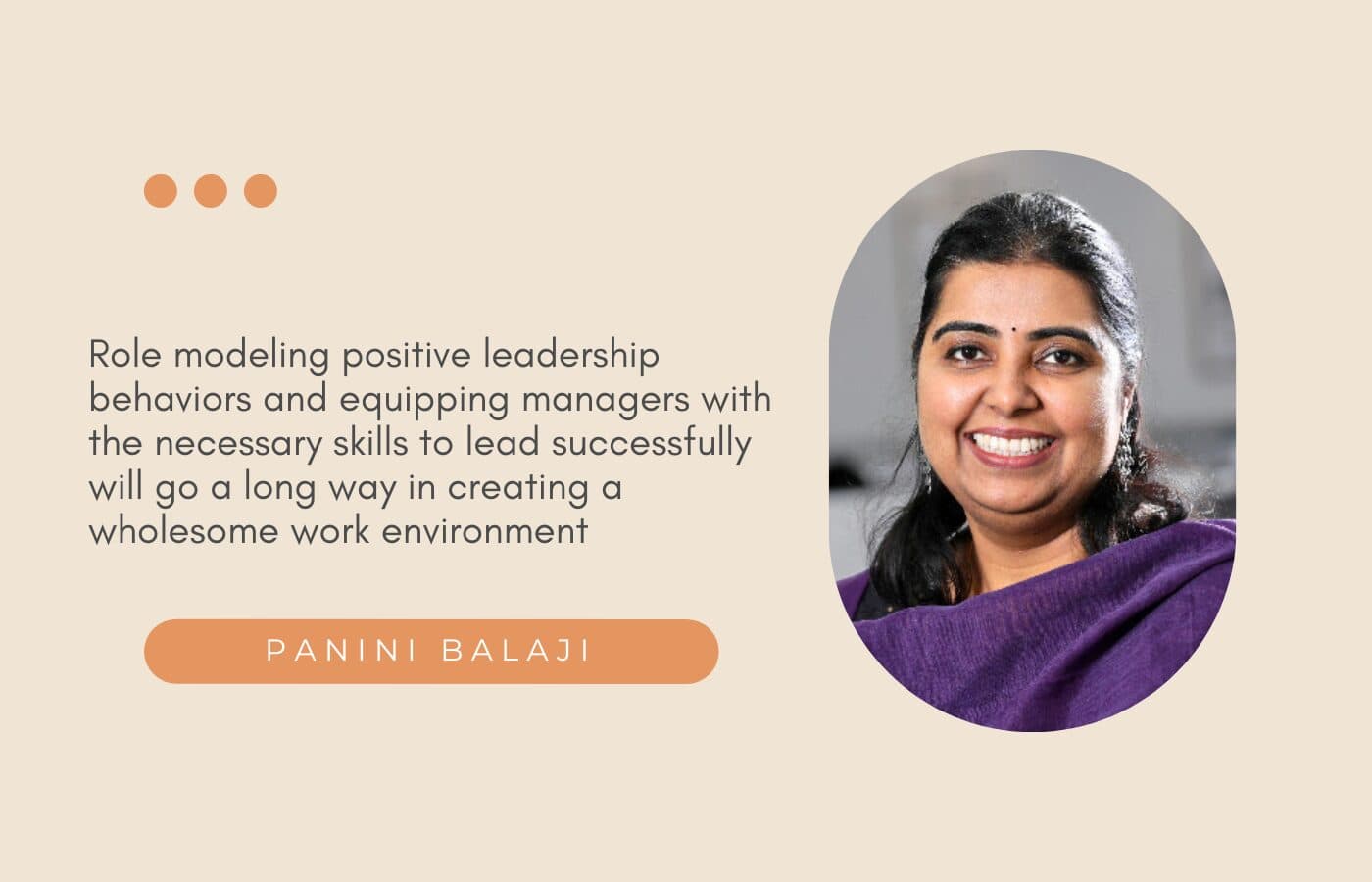
Role modeling positive leadership behaviors and equipping managers with the necessary skills to lead successfully will go a long way in creating a wholesome, less stressful work environment. Ultimately, it’s about creating a space where employees at all levels feel comfortable enough to say, “Hey, I’m struggling”, and trust that they will receive support.
How can HR normalize anxiety-related talks in the workplace?
By initiating more conversations around vulnerability within the organization, HR can cultivate an environment where open communication about mental health is not just encouraged but ingrained in the company culture. This aligns well with a broader strategy of psychological safety, where employees feel comfortable discussing their emotional challenges without fear of judgment.
A key element of this strategy is not only relying on external experts, such as mental health consultants, to provide coping strategies but also encouraging leaders to share their own stories. When leaders find the courage to be vulnerable in front of their teams, they infuse strength and hope. Such leaders normalize human emotions such as anxiety, guilt, shame, and fear. They serve as role models by demonstrating that vulnerability is a strength, not a weakness. When leads openly share their experiences, they guide their teams on how to manage difficult emotions and seek help when needed.
Their actions set a powerful example, showing that it’s acceptable to prioritize mental health and that seeking support is a positive and necessary step. This leadership by example builds trust, breaks down stigma, and encourages employees to follow suit in taking proactive steps to manage their mental well-being.
Organizations that believe culture building is solely HR’s responsibility are mistaken. Culture building is the CEO’s charter. The CEO sets the vision and tone, and HR brings that vision to life. HR curates and designs training programs and workshops that facilitate meaningful conversations and create effective organizational structures and performance metrics that bridge functions, break silos, foster collaboration, and reward the right behaviors. A broken culture reflects poor leadership at the top and cannot be fixed by simply changing the HR team.
In addition to sharing mental health resources, what other practical steps do you take for managing anxiety?
Many simple, effective techniques can be used to manage stress levels. One such practice is to do a quick ‘check-in’ ritual before the start of a meeting. During this check-in, people share whatever emotion they are experiencing without judgment. For example, a facilitator might ask, ‘What is one word that describes how you’re feeling right now?’ For a group of 10 people, it takes under five minutes. This practice is highly effective because it helps the group tune into how their colleagues are feeling and fosters thoughtfulness toward each other during the meeting.
If someone checks in as ‘anxious’ or ‘sad,’ it can prompt colleagues to follow up later and ask how they can provide support. This could mean offering to assist with tasks that may be causing stress, checking in throughout the day to see how they’re feeling, or simply listening without judgment. Providing support could also involve suggesting resources like employee assistance programs or mental health professionals if appropriate.
This normalizes human emotions in the workplace and encourages everyone to be authentic. In an environment where authenticity and vulnerability are encouraged, it becomes much easier to discuss what is not working or what is causing stress and find strength in the team’s collective intent to support each other and find solutions.
Can you share an incident where you helped someone successfully overcome anxiety? Also, what were your takeaways from it?

In one of my roles, I had a team member who would come in looking stressed every day for the morning stand-up meetings. It would take her several minutes to tune into our discussions, and she was often late. After this had happened a couple of times, I caught up with her over tea and asked her what was going on. She shared how rushing her sleepy preschooler each morning often led to meltdowns, leaving her feeling guilty for dropping off a crying child and stressing about being late to meetings. She was torn between the guilt of rushing her child and considering a break from work to manage it all.
I asked her how we could best support her, and she suggested joining the morning meetings remotely from home. This change would give her the mental space to be fully present in our meetings while also attending to her toddler’s needs. We implemented this adjustment with the team’s support, and it significantly improved our meeting dynamics. When we allowed her to join remotely, she was more relaxed, punctual, and fully engaged in discussions. The team noticed an increase in her contributions, as she no longer appeared distracted or stressed. This small adjustment also set a precedent for flexibility within the team, fostering a more supportive and understanding work environment. As a result, our meetings became more focused, efficient, and collaborative, with everyone feeling comfortable sharing their thoughts.
I believe leaders should create environments where everyone feels heard, valued, and empowered to bring their best selves to work.
I learned two important lessons: First, instead of immediately offering solutions, asking individuals what support they need can lead to more meaningful and effective outcomes. For instance, instead of assuming an employee struggling with workload needs more time, simply asking them what they need could reveal a different challenge like a need for clearer priorities or help with delegation.
Another example could be when an employee expresses feeling burnt out. Instead of offering blanket solutions like more days off, asking what support they need might uncover that they feel isolated and would benefit more from team-building activities or collaborative projects.
Second, as leaders, we shouldn’t hesitate to do the right thing, even if it means bending a few rules. Managers often fear setting precedents with rule deviations but trusting people to act responsibly fosters a positive culture where the vast majority will honor that trust. For the occasional individual who might misuse trust, effective leadership involves addressing the situation fairly and directly.
What message would you like to share for those reading this article?
I encourage everyone reading this article to prioritize creating environments where empathy, support, and understanding thrive. Building the right culture requires sustained, intentional efforts until everyone operates by the same core values and principles.
One word of caution: hire the right leaders. A deeply rooted culture that has taken years to build can be eroded fairly quickly when there is a misaligned leader at the top.
Note: Pictures in this article are representative and not related to the author.